Sudoku Rules and Strategies
Sudoku is a logic puzzle with simple rules. Whether you are solving your first grid or refining your technique, these rules and strategies will help you progress.
Core Sudoku strategies
Every Sudoku can be solved by pure logic. Here are the basic strategies Sudoked.com uses in its hints.
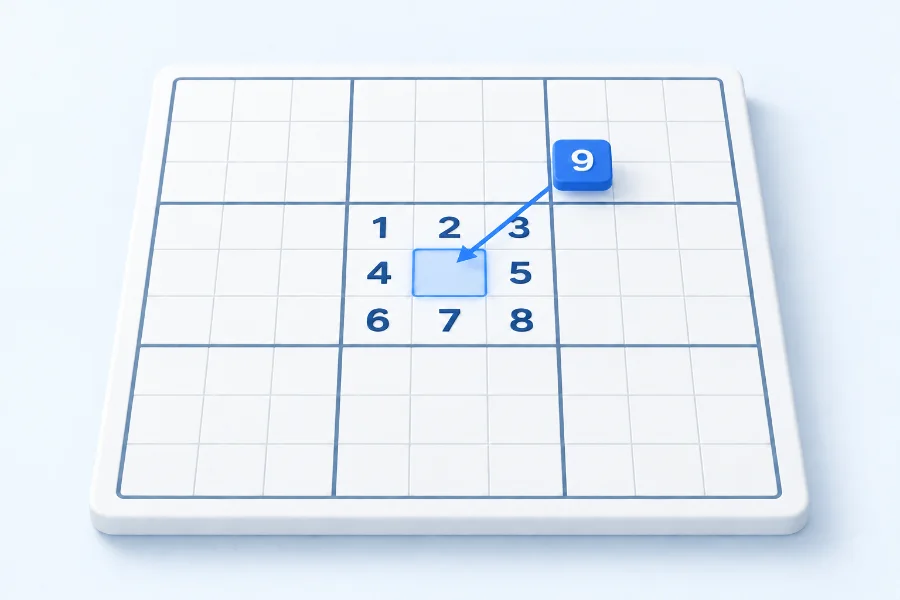
Basics
The essential Sudoku rules and the first solving methods every player should know before moving on to candidate-based techniques.
Continue Reading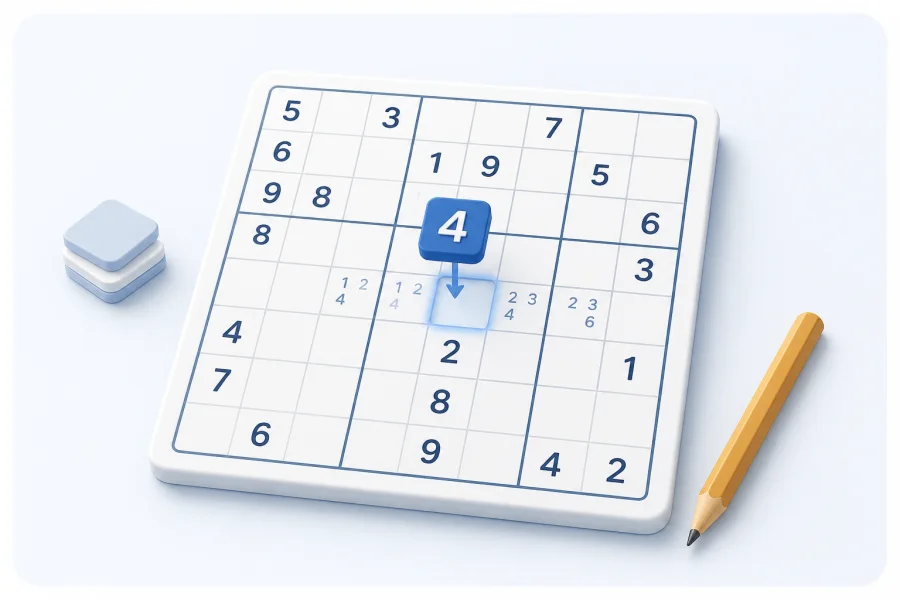
Foundations
Two foundational exclusion deductions — one candidate left in a cell or one position left for a digit — plus Pointing and Claiming, the two directions of one box–line reduction rule.
Continue Reading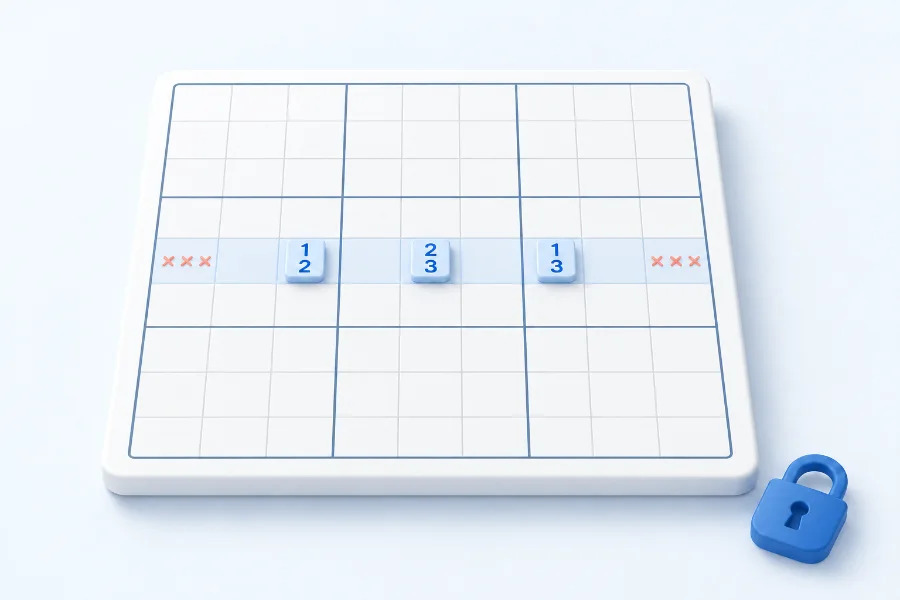
Locked Subsets
Locked subsets: N cells sharing N candidates (naked) or N digits sharing N positions (hidden) inside one house — pairs, triples and quadruples.
Continue Reading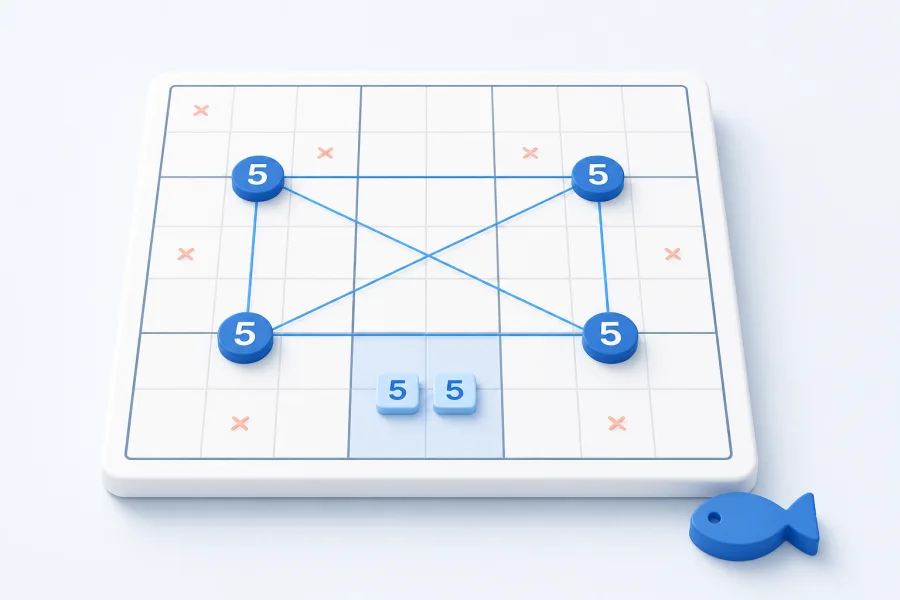
Fish
The basic fish family: X-Wing, Swordfish and Jellyfish balance one digit across N base houses and N cover houses.
Continue Reading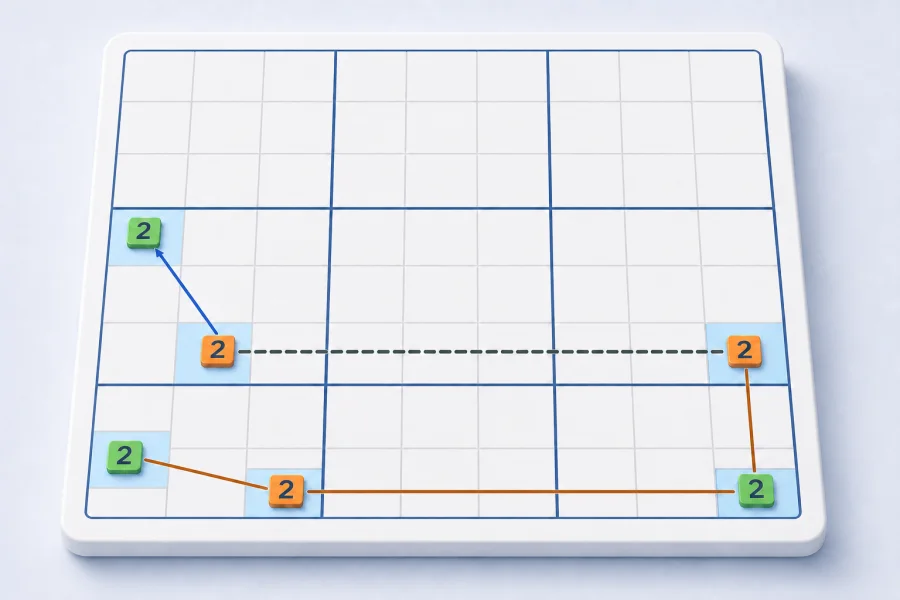
AIC Chains
Open alternating inference chains (AICs): exhaustive alternatives joined as strong-inference nodes, with consecutive nodes connected by weak inferences. This group covers same-digit X-Chains and bivalue-cell XY-Chains.
Continue Reading
AIC Rings
Closed alternating inference chains: same-digit, bivalue, and mixed rings whose closing weak inference is verified independently of the path.
Continue Reading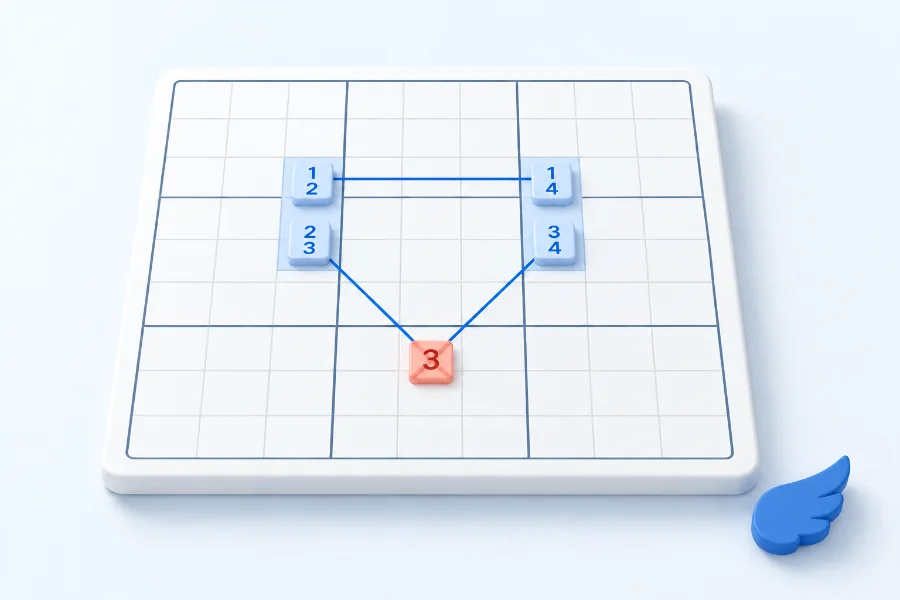
ALS-XZ Wings
Almost-locked-set constructions linked by restricted common candidates: XY-Wing through TUVWXYZ-Wing, plus the doubly linked ring forms.
Continue Reading
Uniqueness
Conditional eliminations that use an explicitly stated unique-solution premise: Unique Rectangles, Unique Loops and the Bivalue Universal Grave (BUG).
Continue Reading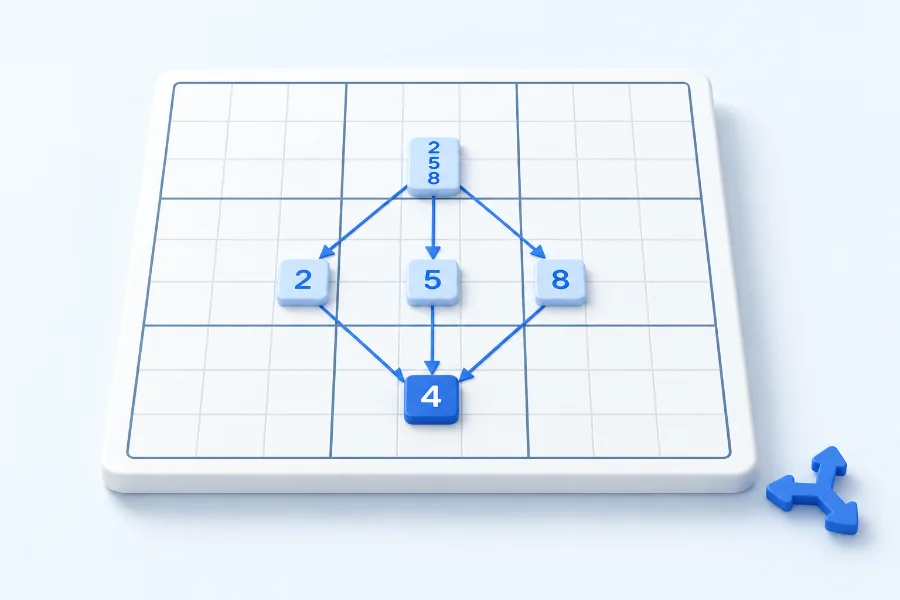
Forcing Fallback
Exhaustive forcing: every alternative of a source cell or house is tested and only conclusions shared by all branches are kept.
Continue Reading