ALS-XZ Wings
Almost-locked-set constructions linked by restricted common candidates: XY-Wing through TUVWXYZ-Wing, plus the doubly linked ring forms.
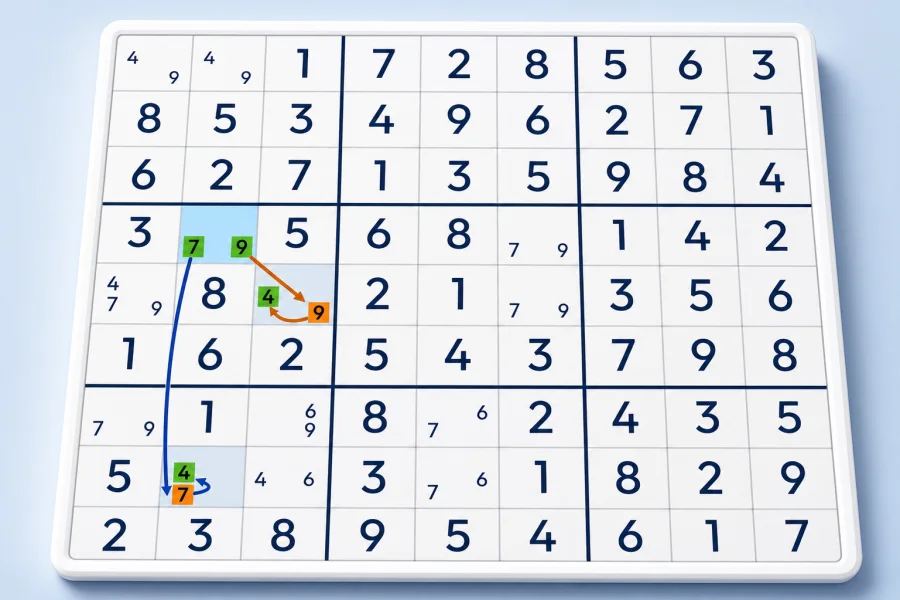
XY-Wing
A three-bivalue-cell AIC and ALS construction with a shared endpoint digit.
Continue Reading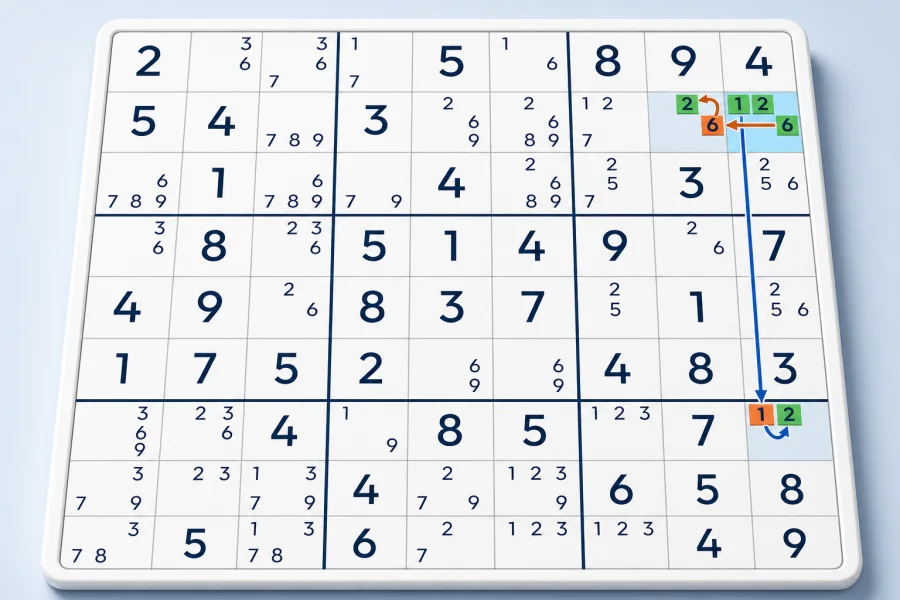
XYZ-Wing
A three-cell ALS-XZ construction whose shared digit has three possible sources.
Continue Reading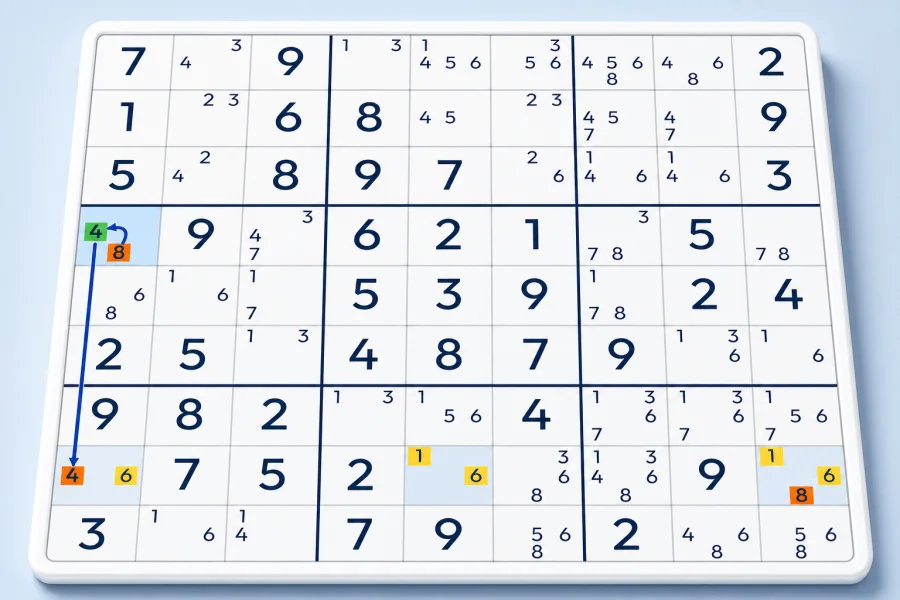
WXYZ-Wing
A single-linked four-cell almost-locked-set wing.
Continue Reading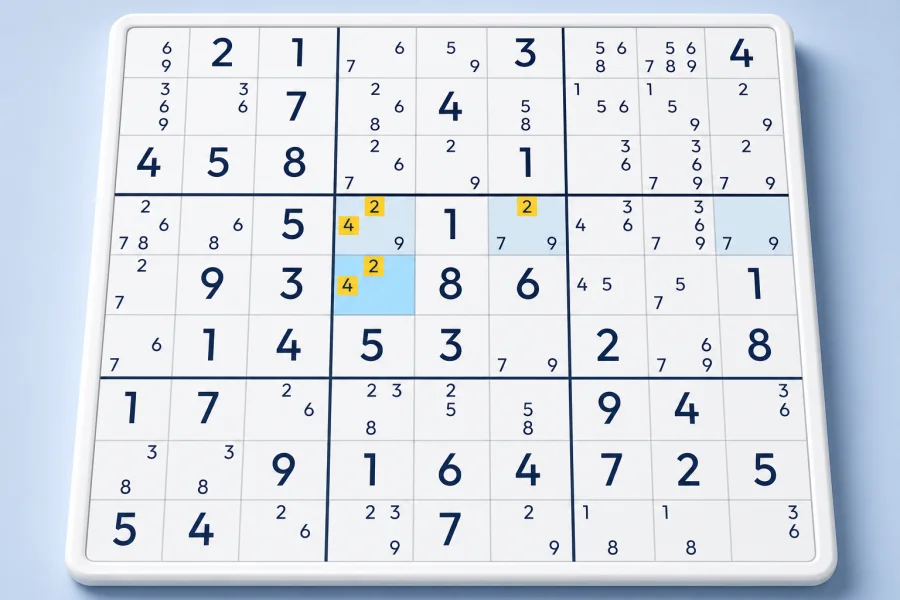
WXYZ-Ring
A double-linked WXYZ ALS construction with two restricted common candidates.
Continue Reading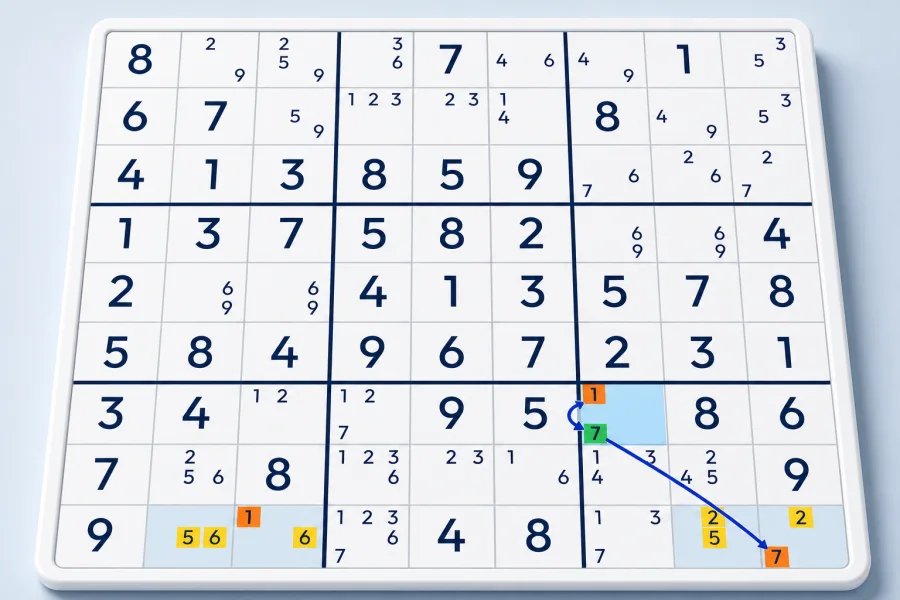
VWXYZ-Wing
A single-linked five-cell almost-locked-set wing.
Continue Reading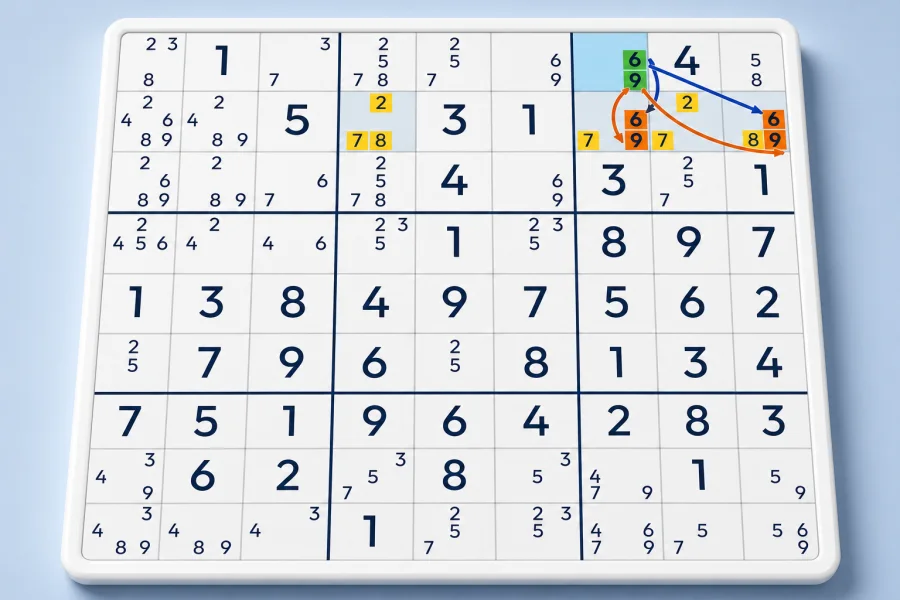
VWXYZ-Ring
The double-linked five-cell form with two restricted commons.
Continue Reading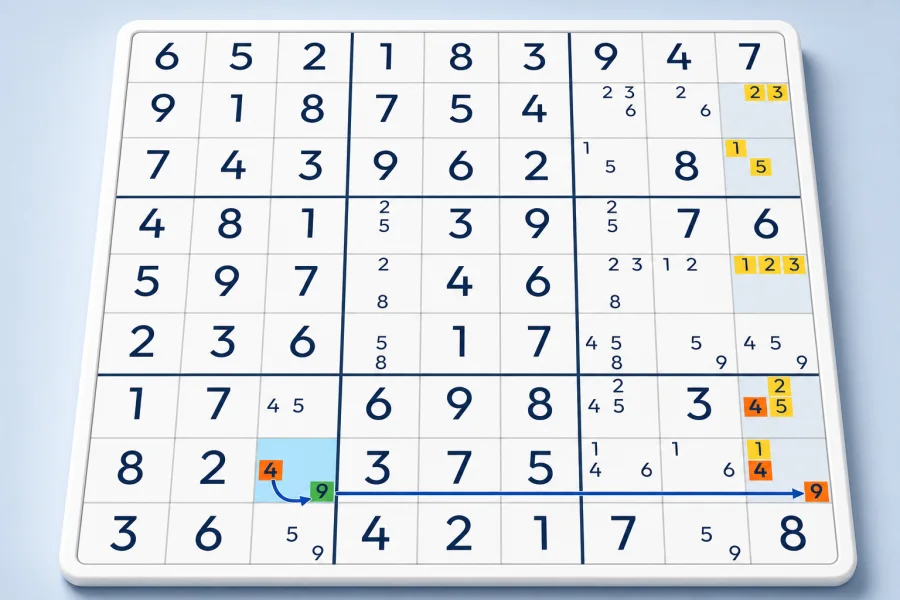
UVWXYZ-Wing
A single-linked six-cell almost-locked-set wing.
Continue Reading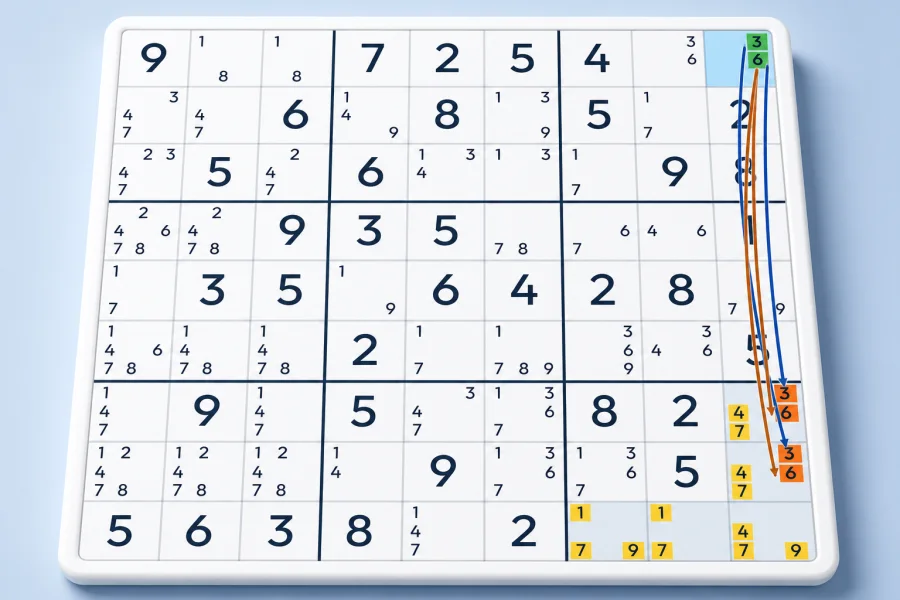
UVWXYZ-Ring
The double-linked six-cell form with two restricted commons.
Continue Reading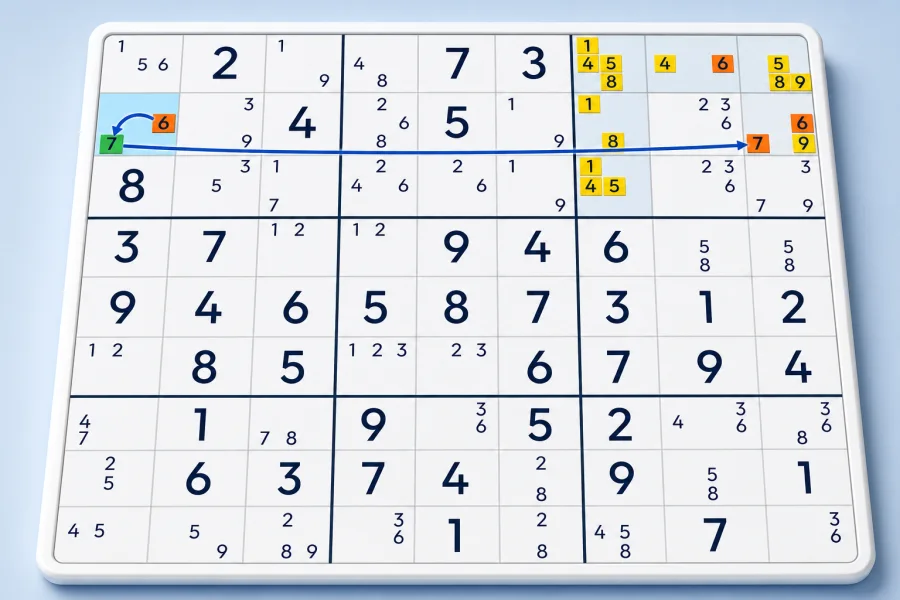
TUVWXYZ-Wing
A single-linked seven-cell almost-locked-set wing.
Continue Reading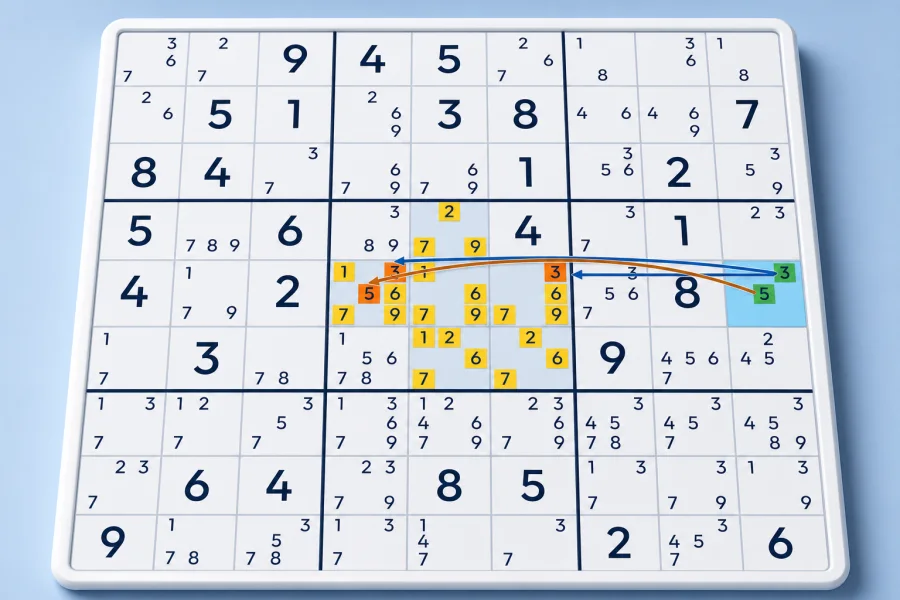
TUVWXYZ-Ring
The double-linked seven-cell form with two restricted commons.
Continue ReadingAlmost locked sets joined by restricted commons
An almost locked set (ALS) is a house fragment of N cells holding N+1 candidates between them. When two such sets share a restricted common candidate (RCC) — a digit that cannot appear in both sets at once — each set is forced to lock onto its other digits wherever the RCC is absent, so a digit common to both can be removed from cells that see every possible position. The lettered wings are all instances of this one ALS-XZ rule at growing set sizes.
In a doubly linked pair the two sets share two RCCs, which yields extra eliminations and locked-set consequences; the Ring in names like WXYZ-Ring means exactly that — two RCCs — and not a closed AIC. The visually central cell shown in the guides is a spotting aid only: the proof operands are the ALS sets, the RCC and the universal visibility condition for each target.