Locked Subsets
Locked subsets: N cells sharing N candidates (naked) or N digits sharing N positions (hidden) inside one house — pairs, triples and quadruples.
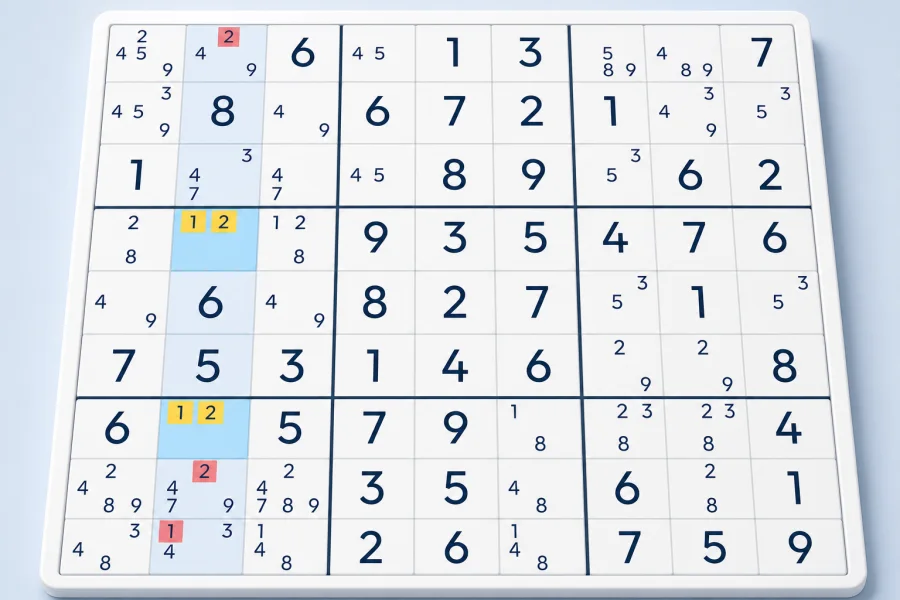
Naked Pairs
Two matching two-candidate cells that eliminate peers.
Continue Reading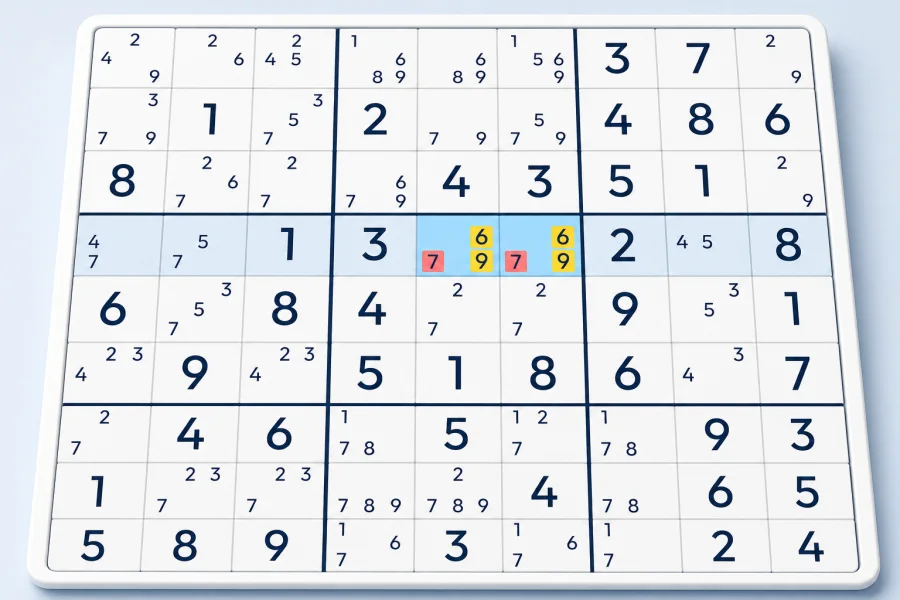
Hidden Pair
Two digits restricted to two cells in one house.
Continue Reading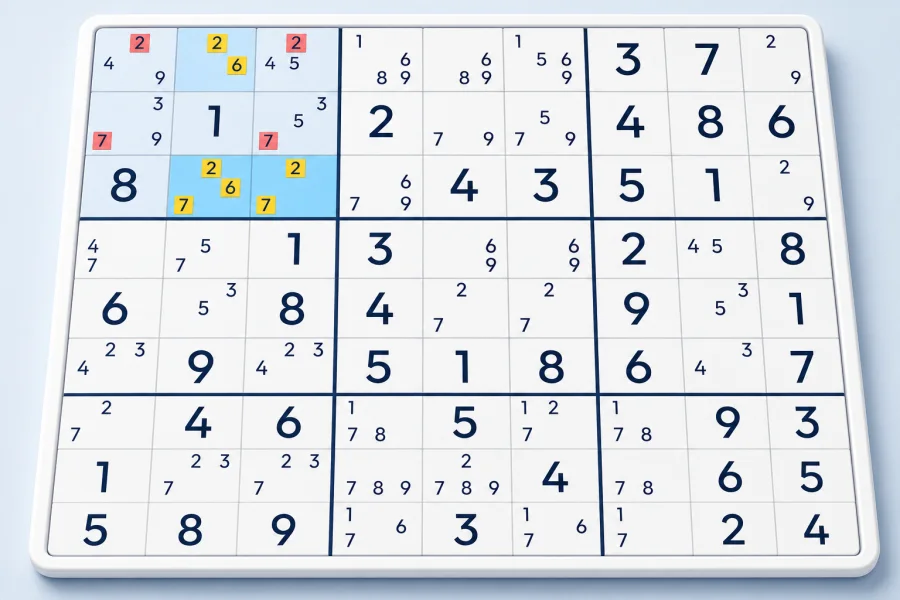
Naked Triple
Three cells containing only three combined candidates.
Continue Reading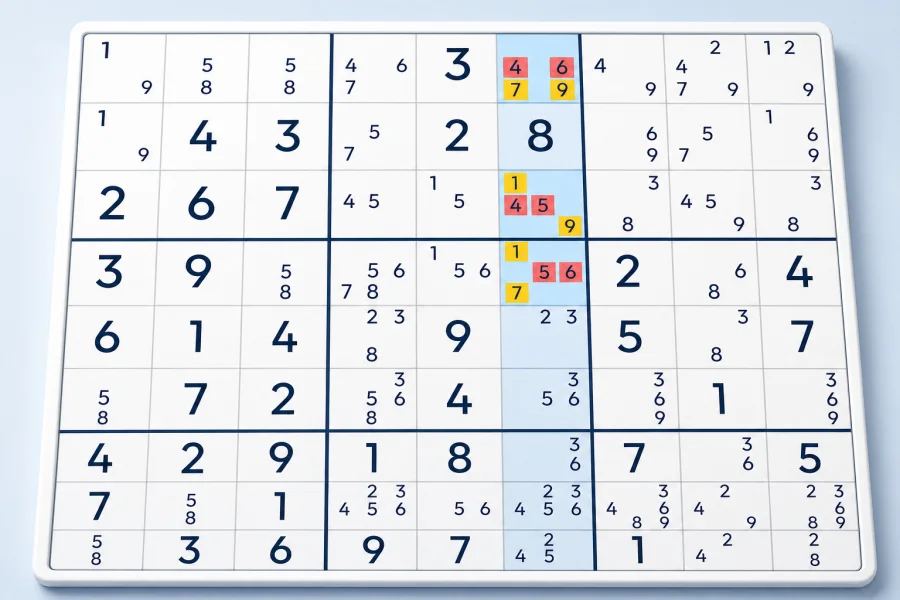
Hidden Triple
Three digits confined to three cells in one house.
Continue Reading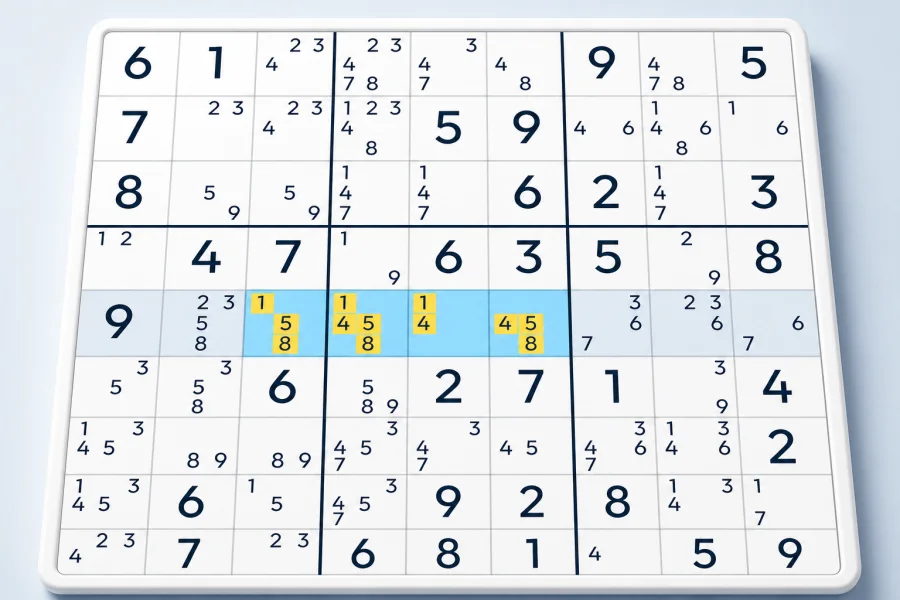
Naked Quad
Four cells restricted to four combined candidates.
Continue Reading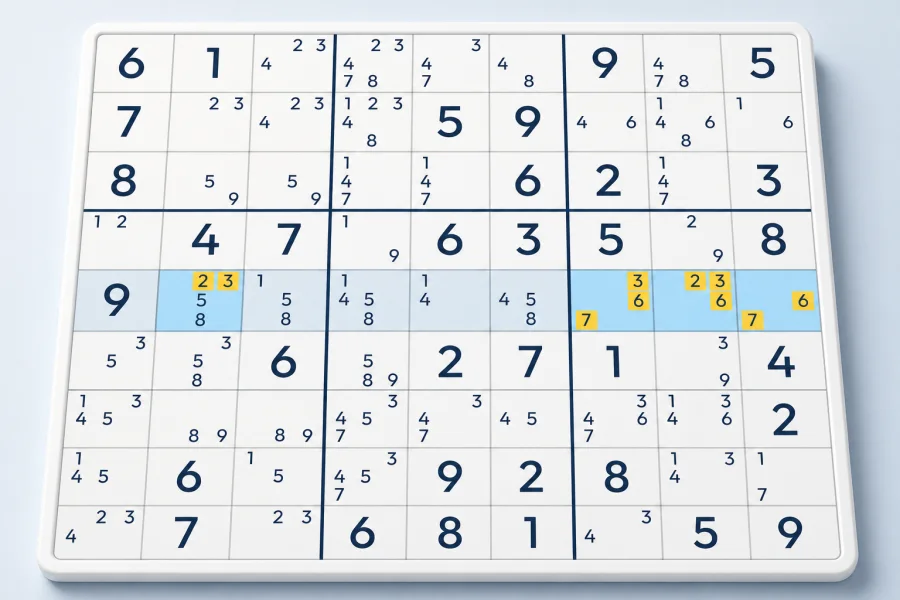
Hidden Quad
Four digits confined to four cells in one house.
Continue ReadingOne theorem, all sizes
A locked subset balances N objects with N possibilities inside one house. In the cell view, N cells have a union of N candidate digits: a naked subset removes those digits from the other cells of the house. In the positional view, N digits have a union of N positions: a hidden subset removes all other candidates from those cells.
Pairs, triples and quadruples are the same theorem at N = 2, 3 and 4 — a Quad is not a more advanced rule, just a larger instance that is rarer and harder to spot. The related fish constructions (X-Wing, Swordfish, Jellyfish) apply the same accounting across several houses and have their own group.