Hidden Triple
A Hidden Triple — also written Hidden Triplet — occurs when three digits are confined to a total of three cells in one row, column, or box. The digits need not appear in exactly the same cells. Other candidates can be removed from those three cells.
What is a Hidden Triplet?
For three selected digits, take the union of all their remaining positions in one house. If that union contains exactly three cells, those cells must hold the three digits between them, so no other candidates can remain in them.
Walkthrough example
A walkthrough of one Hidden Triple: three digits whose only three possible cells in a house reserve those cells for them.
Step 1
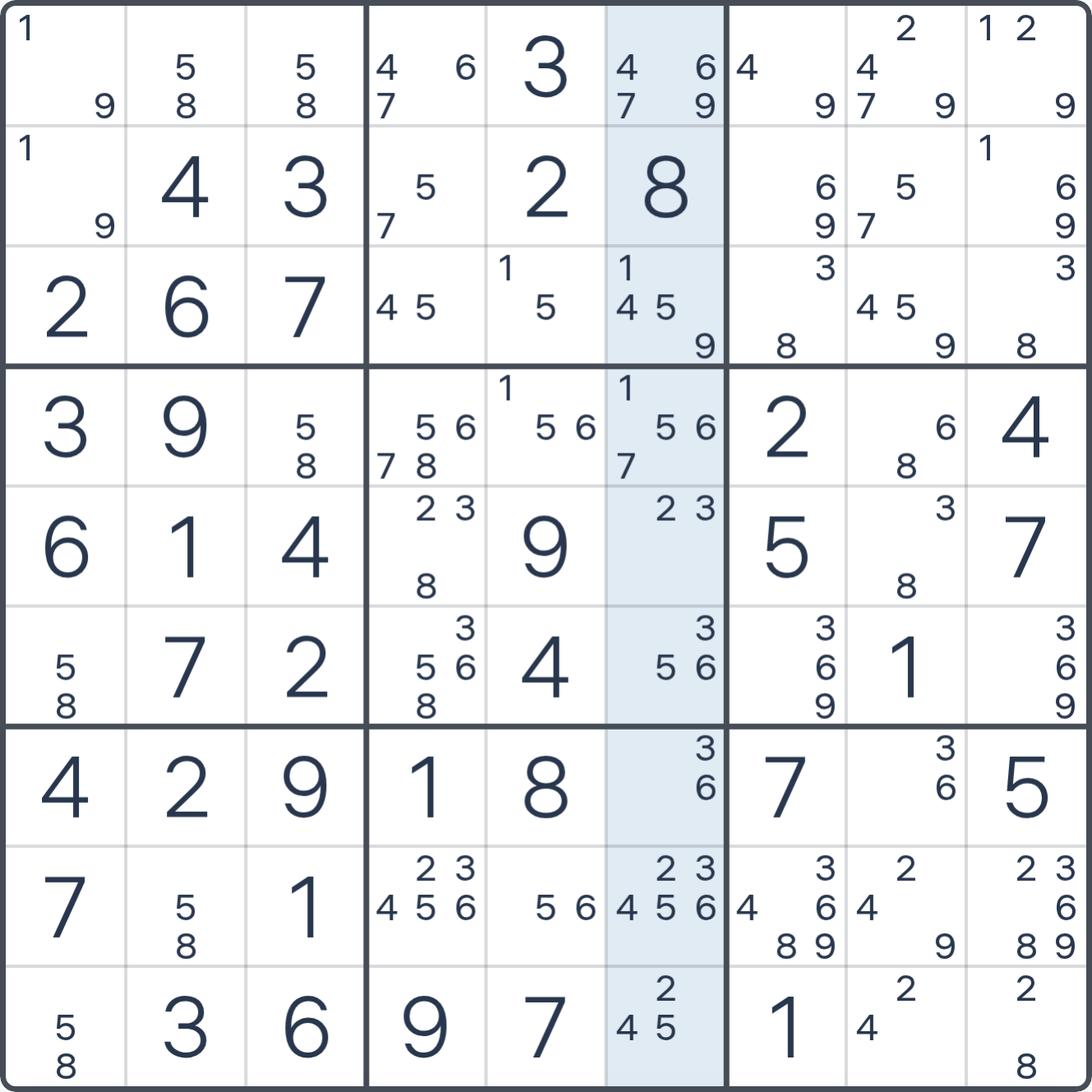
Consider this column.
Step 2
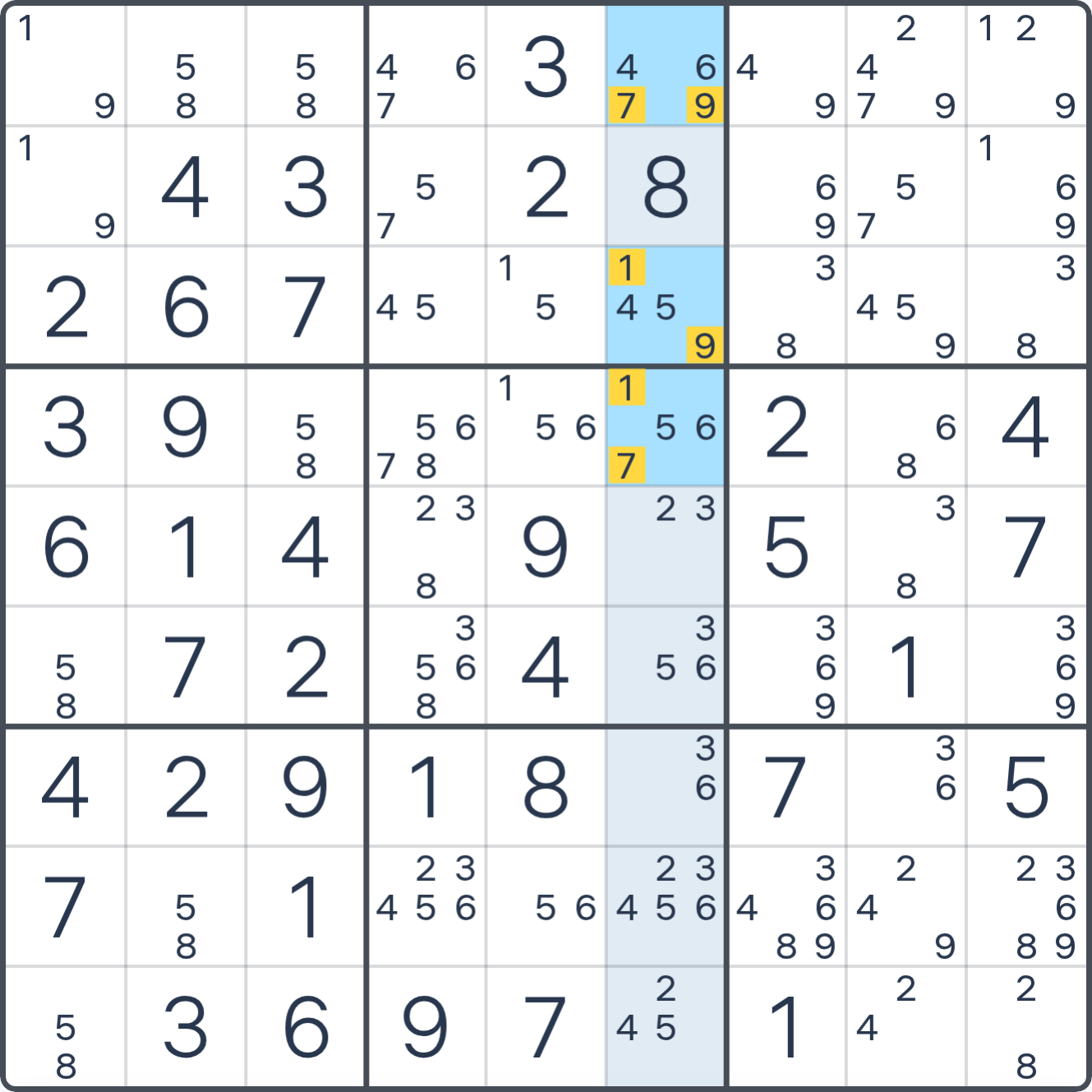
The highlighted cells inside it are the only possible positions for values 1, 7 and 9.
Step 3
This means that these cells will definitely contain 1, 7 and 9 in some order, so we can remove the other notes from these cells.
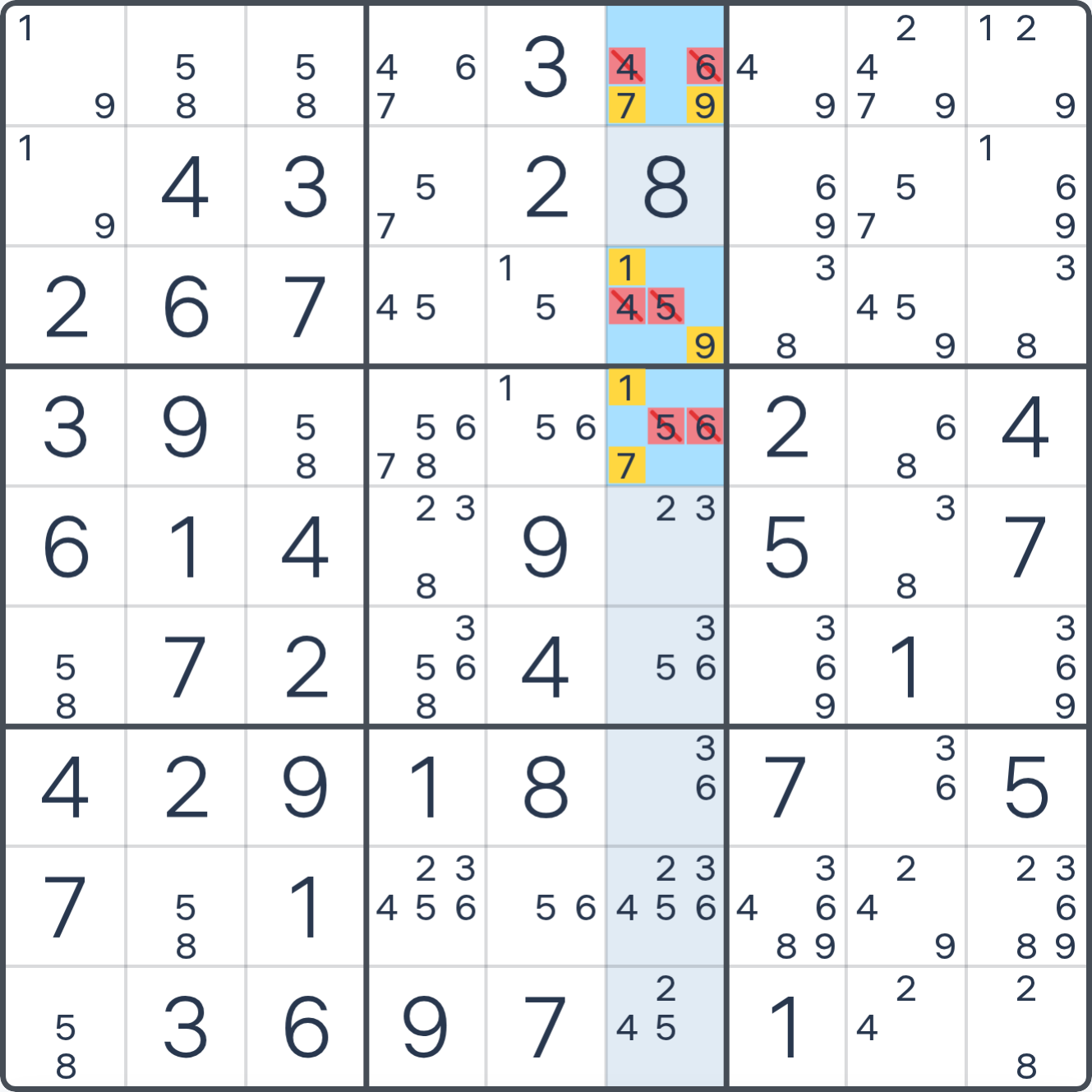
Three digits whose only three possible cells in a house reserve those cells for them — that confinement is what justifies removing every other candidate from the three cells. You can play sudoku online to practise spotting it on real puzzles.
How to spot it
In one house, track positions digit by digit and look for three digits whose combined positions occupy exactly three cells. One digit may appear in two cells and another in all three; identical distributions are not required.
The logic
The house must contain all three selected digits. Since their combined possible positions are exactly three cells, those cells are reserved for them. Any other candidate in one of those cells can be removed.