Basics
The essential Sudoku rules and the first solving methods every player should know before moving on to candidate-based techniques.
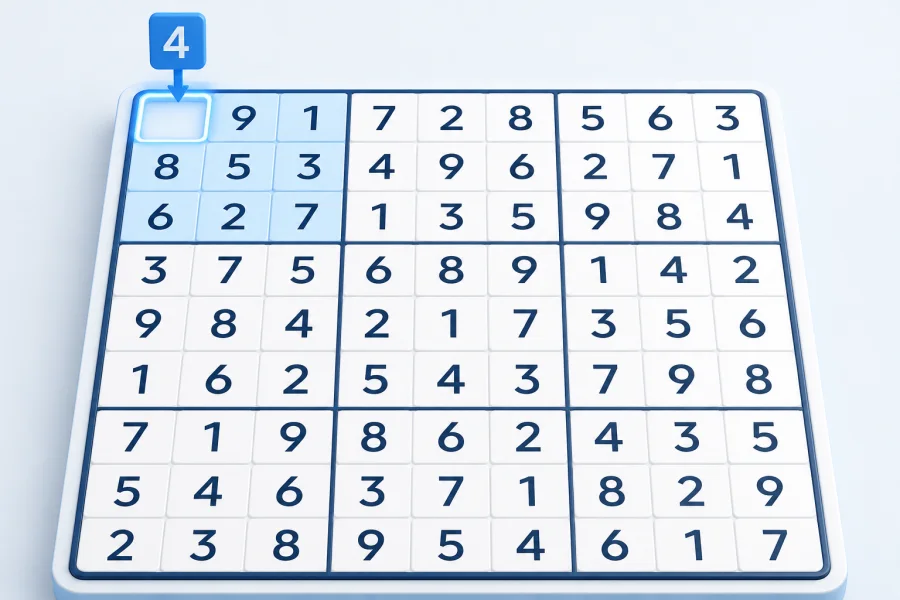
Last Free Cell
When only one empty cell is left in a row, column or box, it must contain the only missing digit.
Continue Reading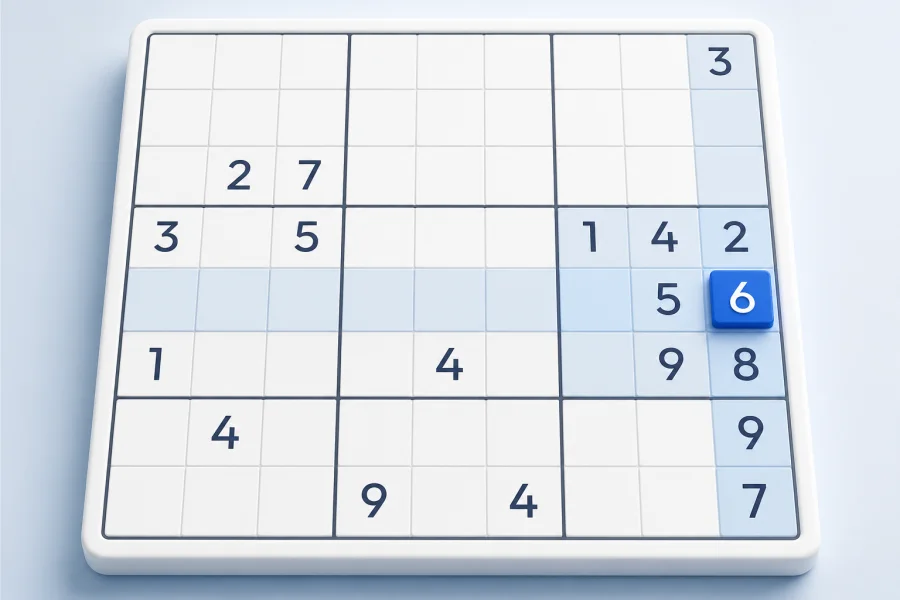
Last Possible Number
Look at the digits already present in a cell's row, column and box to find the only digit that can still fit.
Continue Reading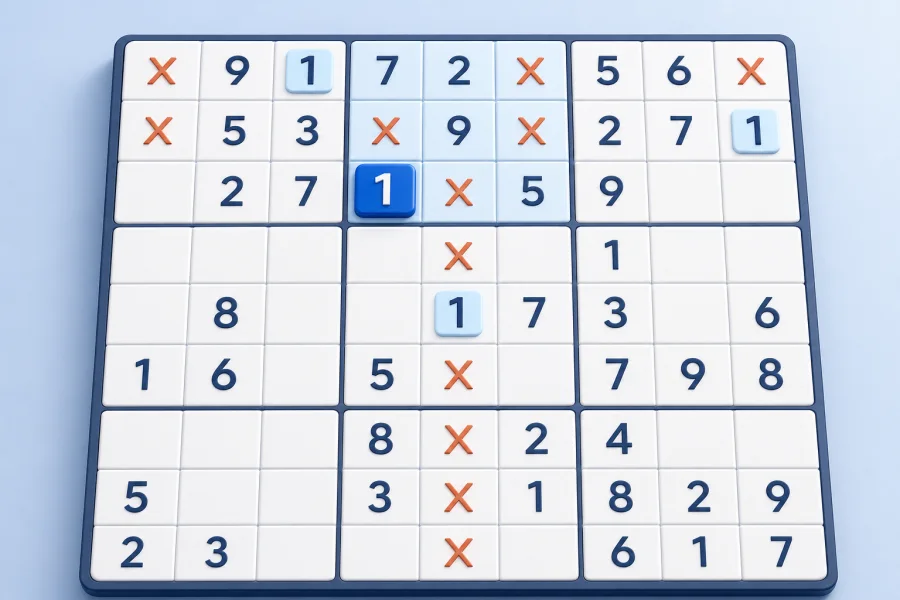
Last Remaining Cell
When only one cell in a row, column or box can accept a particular digit, that digit must go there.
Continue Reading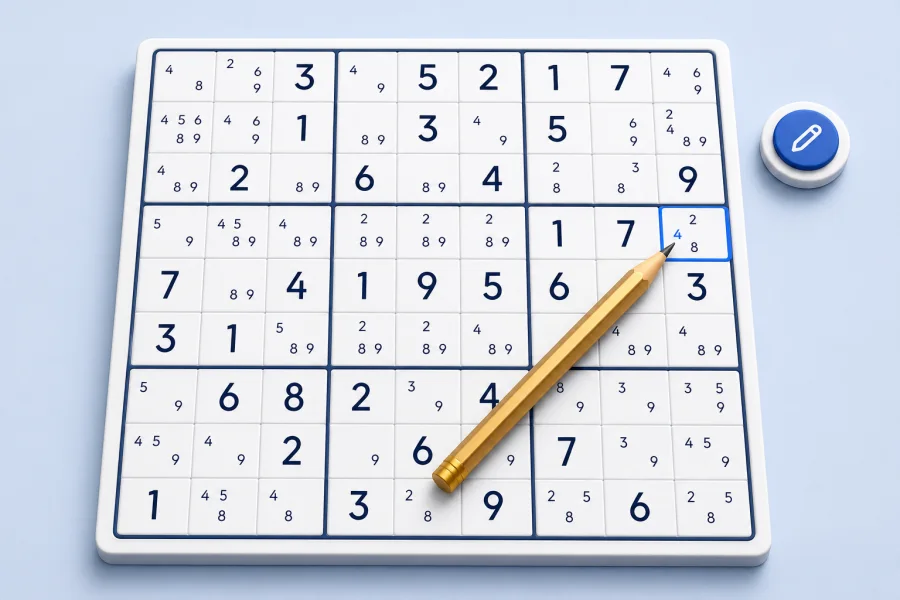
Notes in Sudoku
Use pencil marks to list candidate digits in a cell. Good notes make hidden singles, pairs and triples visible.
Continue ReadingHow the basic Sudoku techniques work
A standard Sudoku has nine rows, nine columns and nine 3×3 boxes. Each of these units—often called a house—must contain the digits 1 through 9 exactly once. Solving therefore starts with constraint checking: compare an empty cell with its row, column and box, then rule out every digit already present. No guessing or arithmetic is required.
The guides in this section teach three basic exact-one deductions. A Last Free Cell completes a house with one empty cell. For a Last Possible Number, count through 1–9 and exclude eight digits from one cell. For a Last Remaining Cell, crosshatch one digit through a house until eight positions are filled or blocked and one remains. Resolving either kind of single also rules digits out for the cell and its peers; the large solved digit is the compact record of those exclusions. The notes guide explains how to record those exclusions as written candidates.