Foundations
Two foundational exclusion deductions — one candidate left in a cell or one position left for a digit — plus Pointing and Claiming, the two directions of one box–line reduction rule.
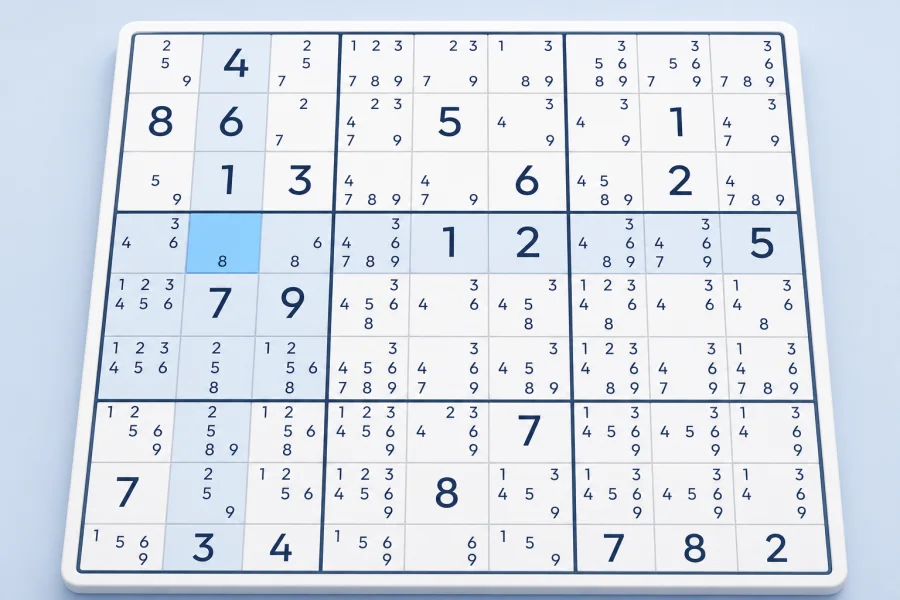
Naked Singles
Eight digits are excluded from a cell; resolve the survivor and its 20 peer exclusions.
Continue Reading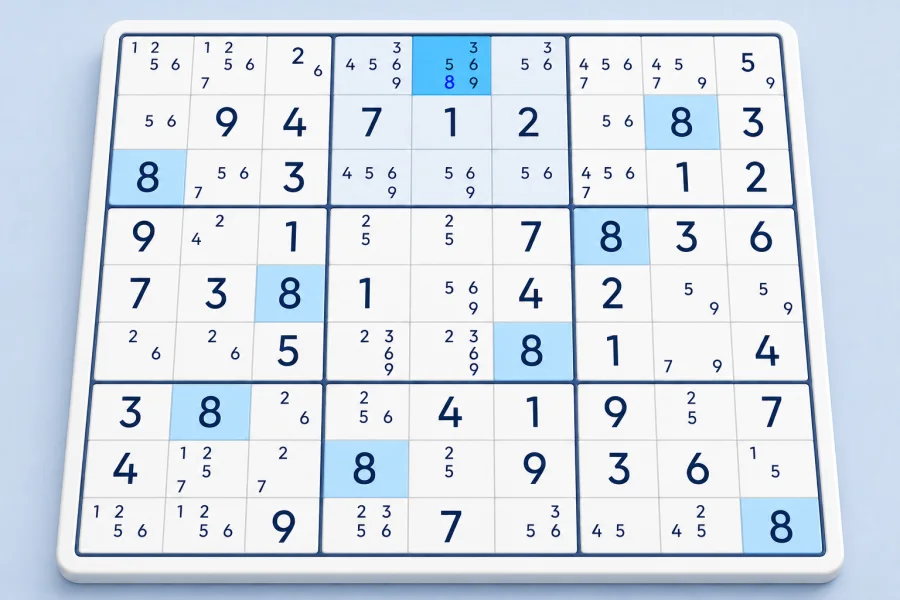
Hidden Single
Eight positions for a digit are excluded in a house; resolve the survivor and its 8+12 consequences.
Continue Reading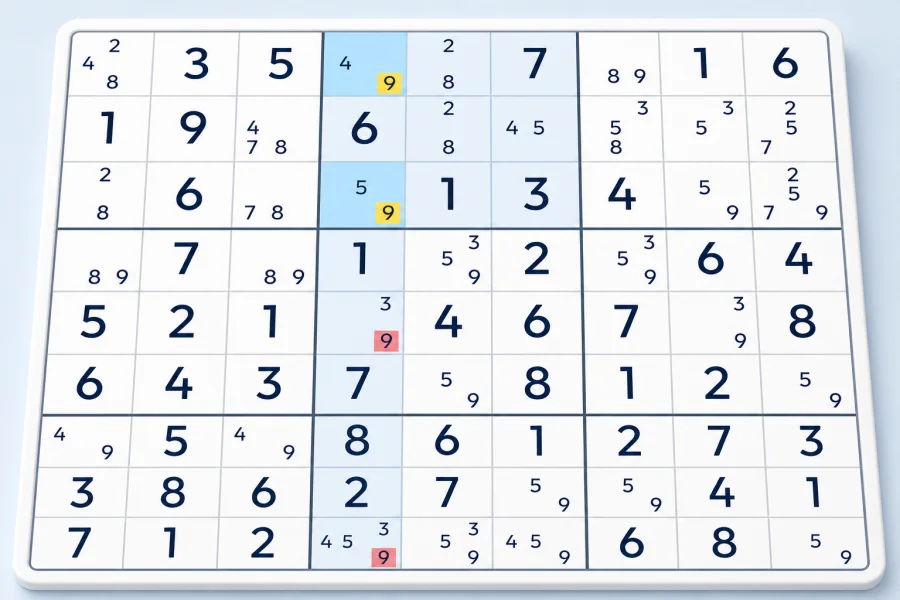
Pointing
Box-to-line candidate restriction and elimination.
Continue Reading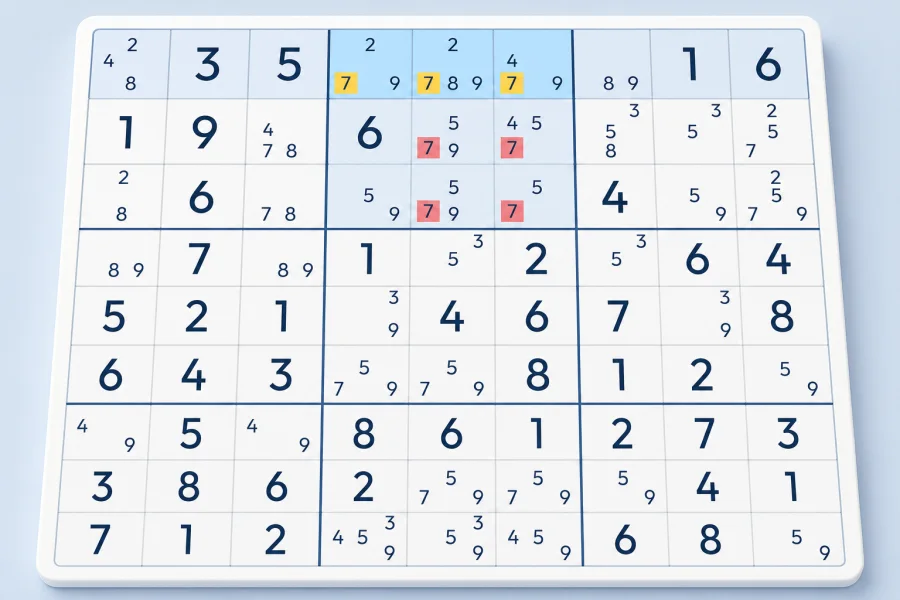
Claiming
Line-to-box candidate restriction and elimination.
Continue ReadingSingles and the box–line reduction rule
Naked Singles and Hidden Singles resolve exact-one constraints through exclusions. For a Naked Single, eight digits have been excluded from one cell; resolving the survivor excludes it from all 20 peers. For a Hidden Single, eight positions for one digit have been excluded from a house; resolving the surviving position excludes the cell's other digits and excludes that digit from the 12 peers outside the source house. Count through 1–9 for Naked Singles and crosshatch one digit through a house for Hidden Singles.
Pointing and Claiming are not two separate laws but the two directions of a single box–line reduction rule: when every candidate for a digit inside one house lies in the intersection with a second house, the digit is locked into that intersection and can be removed from the rest of the other house. Pointing reads box → line; Claiming reads line → box.