AIC Chains
Open alternating inference chains (AICs): exhaustive alternatives joined as strong-inference nodes, with consecutive nodes connected by weak inferences. This group covers same-digit X-Chains and bivalue-cell XY-Chains.
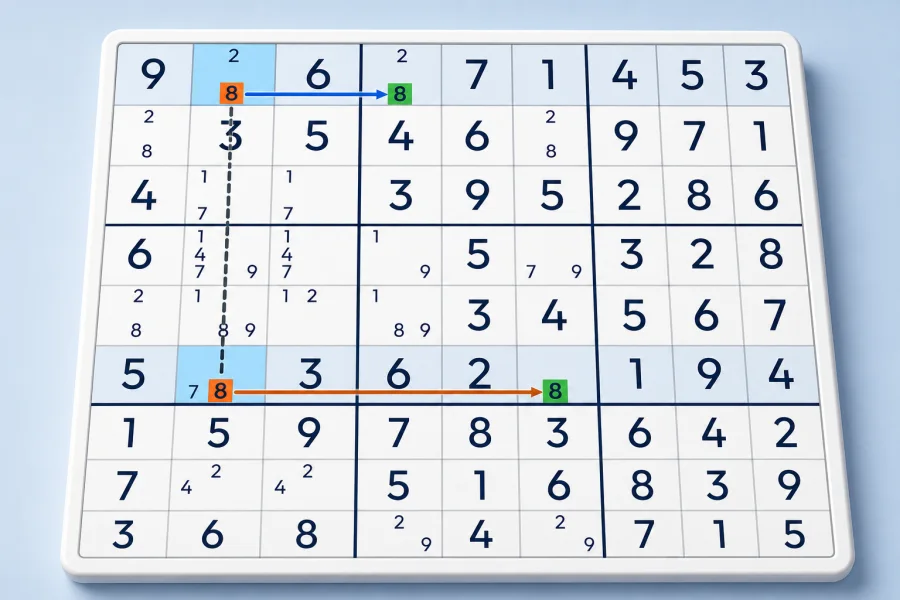
Skyscraper
A two-node X-Chain with parallel row or column strong inferences.
Continue Reading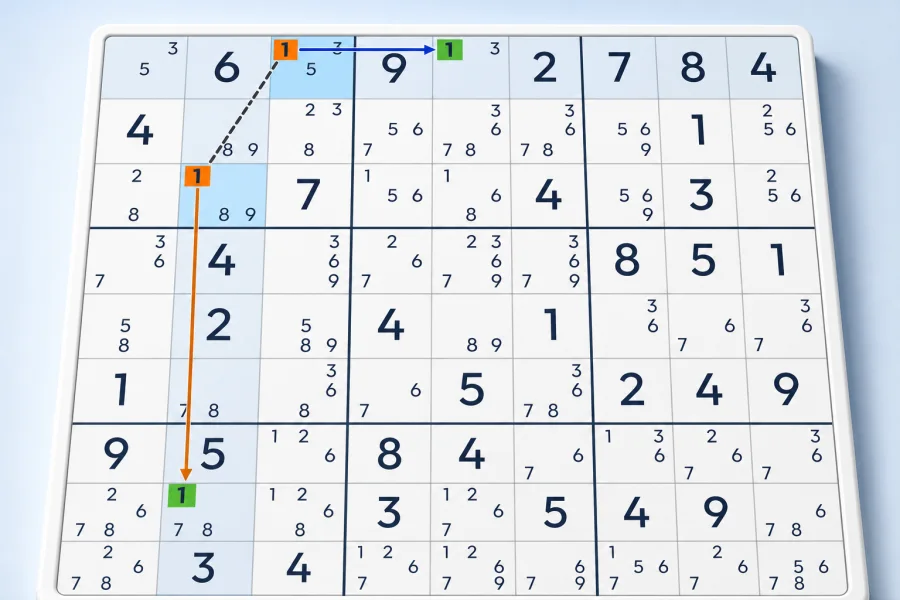
2-String Kite
A two-node X-Chain with row and column strong inferences joined through a box.
Continue Reading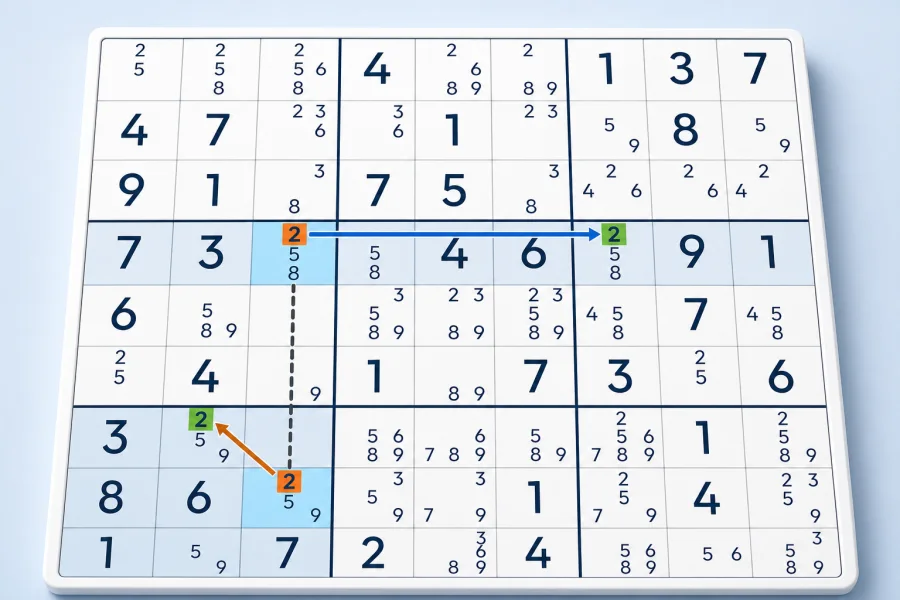
Two-Node X-Chain
The general same-digit signature (A=B)-(C=D).
Continue Reading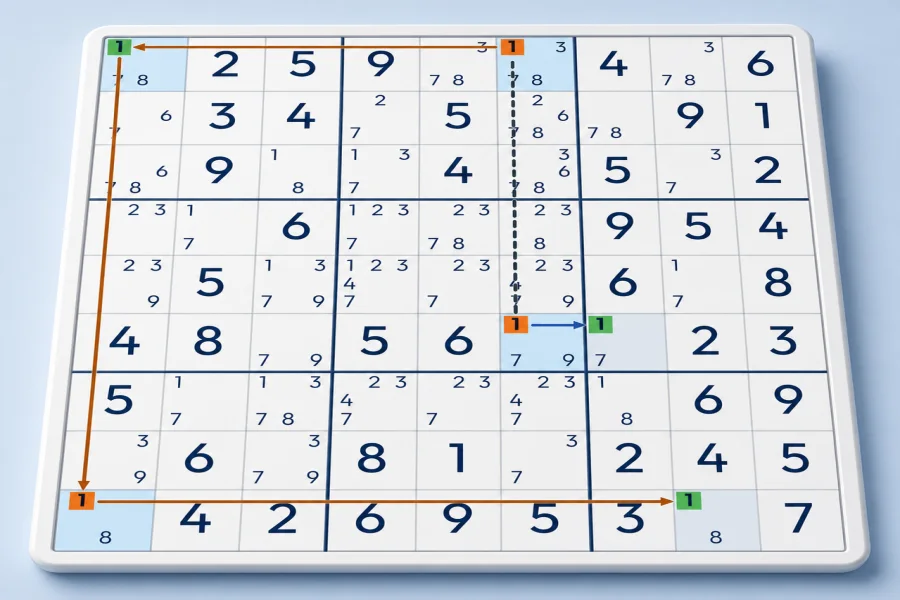
3 Skyscrapers
The three-node signature (A=B)-(C=D)-(E=F) in parallel houses.
Continue Reading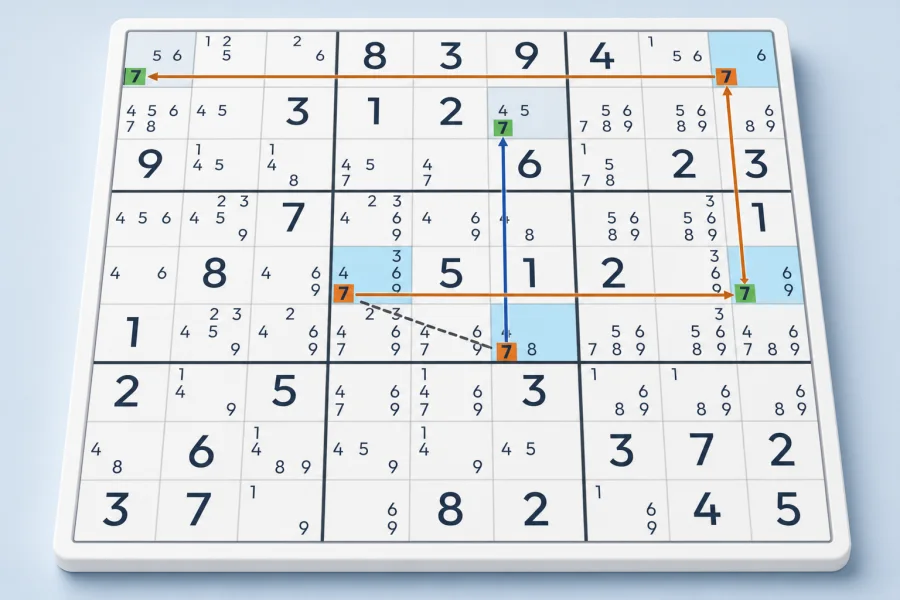
3-String Kite
The three-node signature with alternating row and column houses.
Continue Reading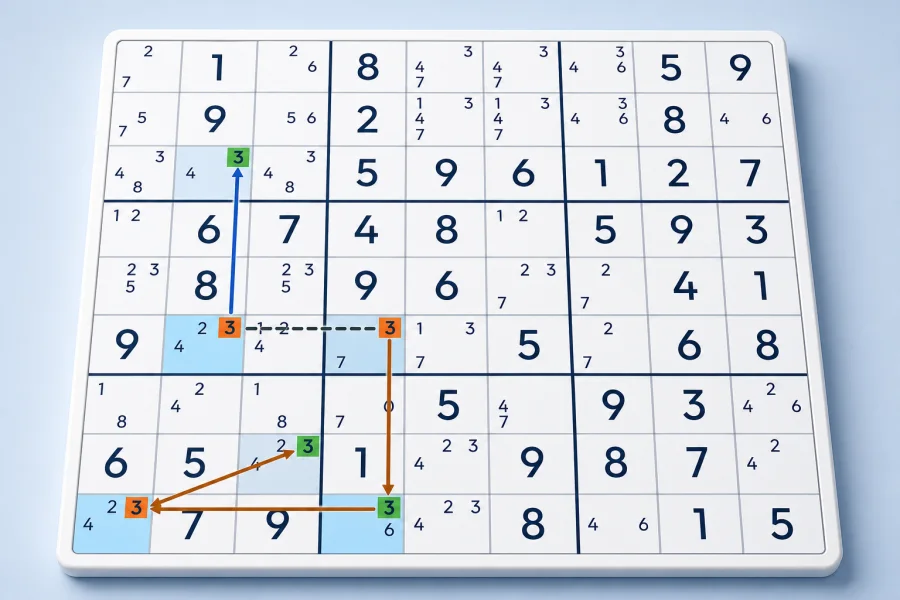
Three-Node X-Chain
The general same-digit signature (A=B)-(C=D)-(E=F).
Continue Reading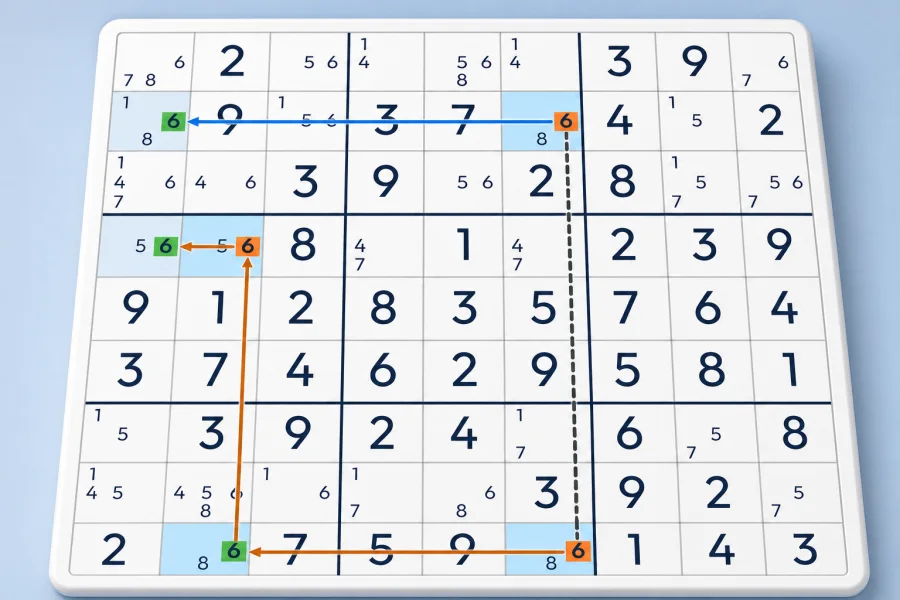
Grouped 3 Skyscrapers
The parallel-house three-node signature with at least one grouped side.
Continue Reading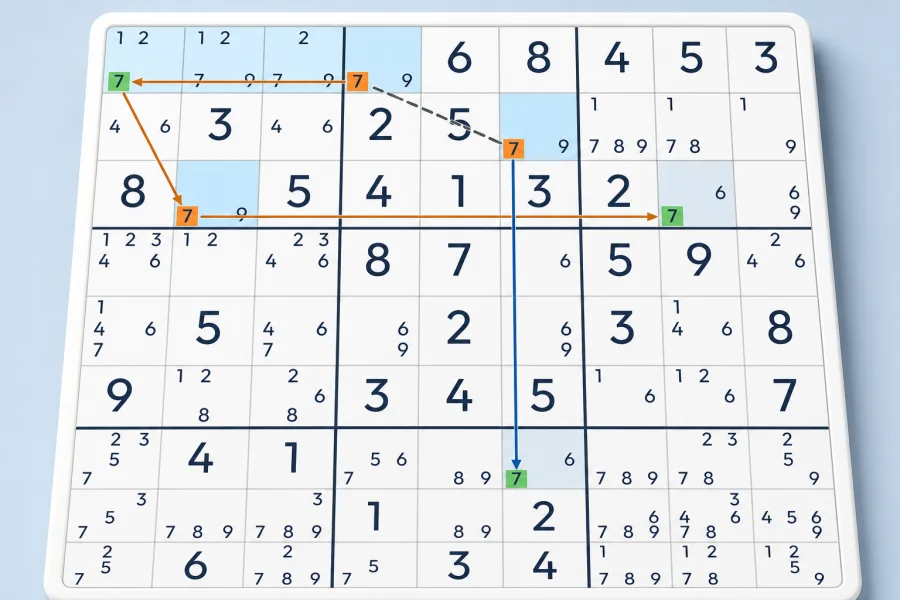
Grouped 3-String Kite
The alternating row-column three-node signature with at least one grouped side.
Continue Reading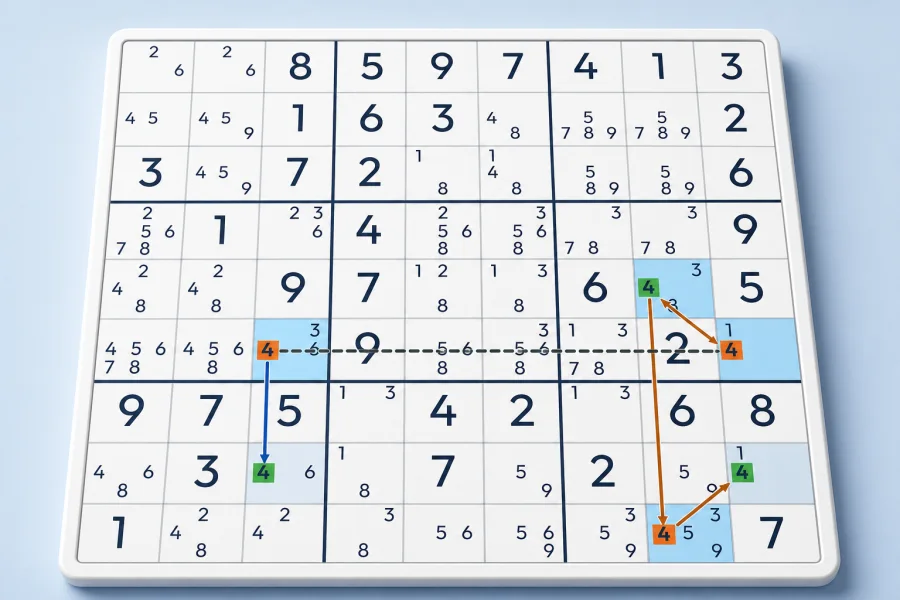
Grouped Three-Node X-Chain
The general three-node X-Chain with one or more grouped sides.
Continue Reading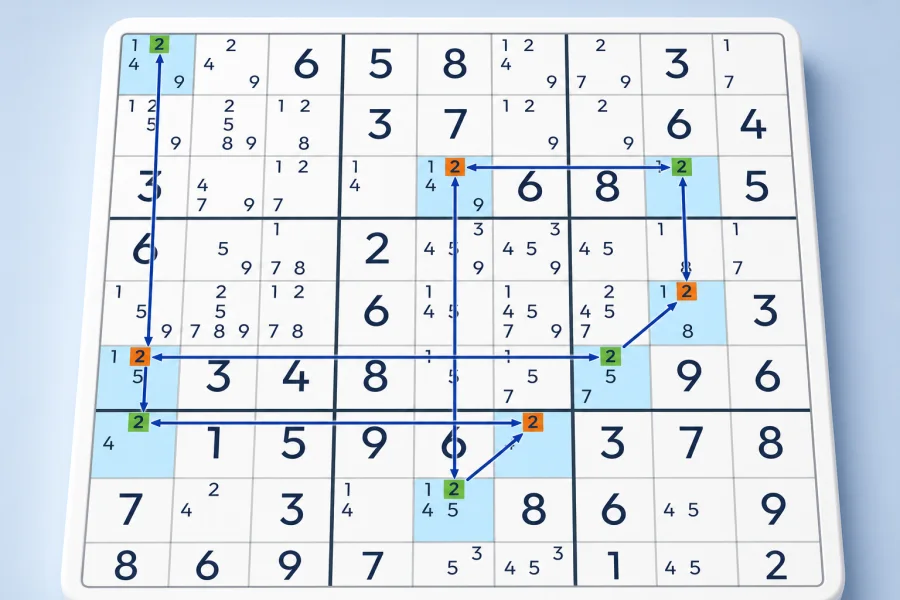
Four+ Node X-Chain
An open single-digit alternating inference chain (AIC) of four or more strong-inference nodes.
Continue Reading
XY-Chain
An open alternating inference chain through bivalue cells.
Continue ReadingHow an alternating inference chain proves an elimination
Write an open AIC as (A=B)-(C=D)-...-(Y=Z). Each equals sign is a strong inference between exhaustive alternatives: if one side is false, the other is true. Each dash is a weak inference: its connected sides cannot both be true. Alternating these relations proves the inclusive endpoint disjunction A OR Z; it does not choose one unique internal assignment.
A target can be removed only when it conflicts with every candidate represented by both endpoints. Grouped sides are disjunctions and require universal incompatibility at each weak inference. Skyscraper and 2-String Kite restrict the house signature of a two-node X-Chain; the three-node named forms extend it to (A=B)-(C=D)-(E=F). XY-Chains use bivalue-cell nodes, while XY-Wing's equivalent AIC reading is taught in the ALS-XZ Wings group.