Unique Loop Type 2
This deduction assumes the puzzle has exactly one solution and that all earlier candidate removals were sound. A Type 2 Unique Loop starts from a candidate state in which swapping two digits across the construction would preserve every touched row, column and box. The rescue cells share an extra digit that must occur in at least one of them, so the digit is removed from every candidate that sees all of them.
What is Unique Loop Type 2?
This deduction assumes the puzzle has exactly one solution and that all earlier candidate removals were sound. First verify the complete two-value structure: an even loop of unsolved cells sharing the same two base digits, with exactly two loop cells in every house it touches. Exchanging those digits around the loop must move no given and must leave each affected house with one occurrence of each base digit. Type 2 then applies its additional rescue condition; an arbitrary even cycle is not enough.
In Type 2 the rescue cells share one extra digit. At least one rescue cell must take it, so the digit is removed from every outside candidate that sees all of the rescue cells.
Walkthrough example
A walkthrough of one Unique Loop Type 2: the rescue cells share one extra digit, which is removed from every candidate that sees all of them.
Step 1
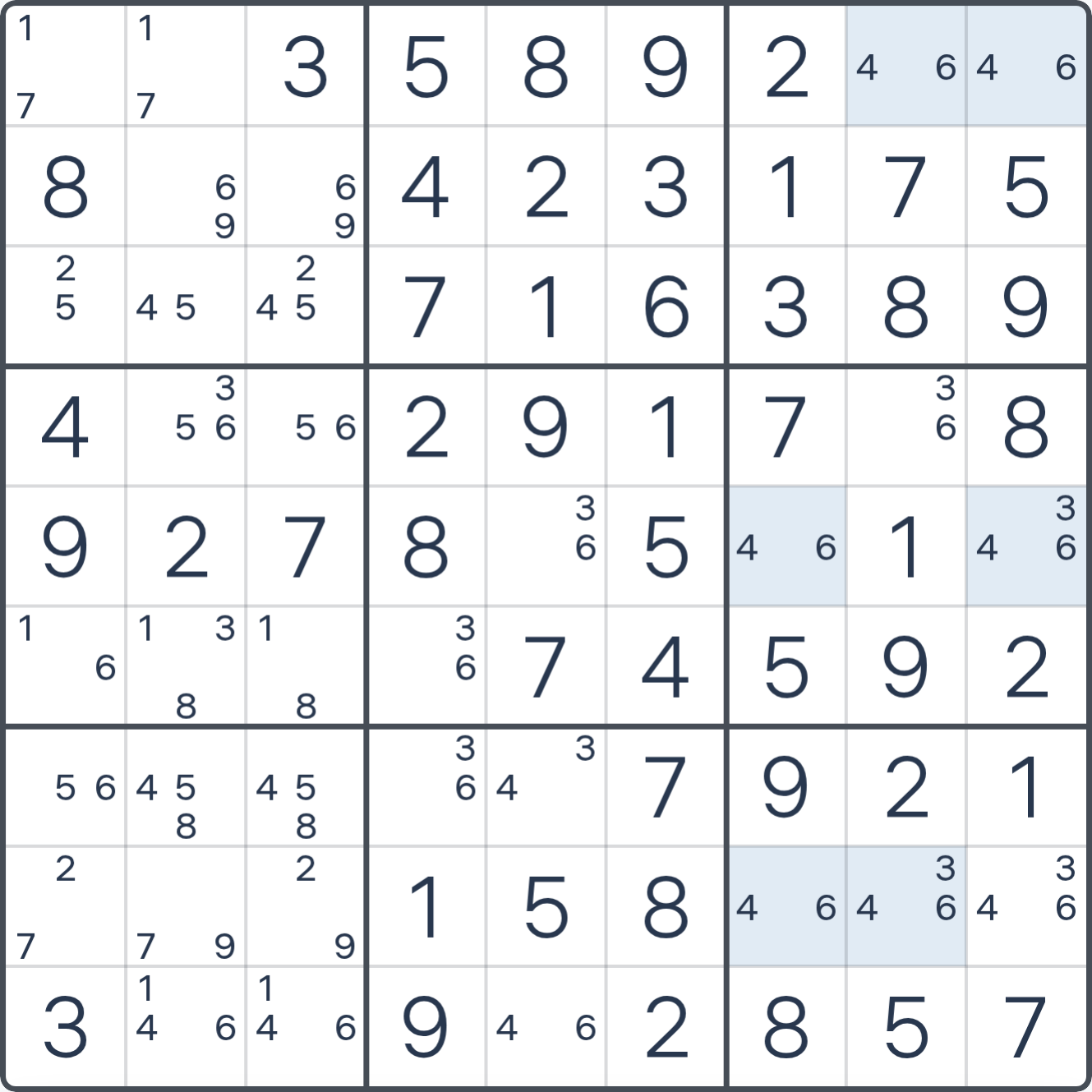
Consider these 6 cells.
Step 2
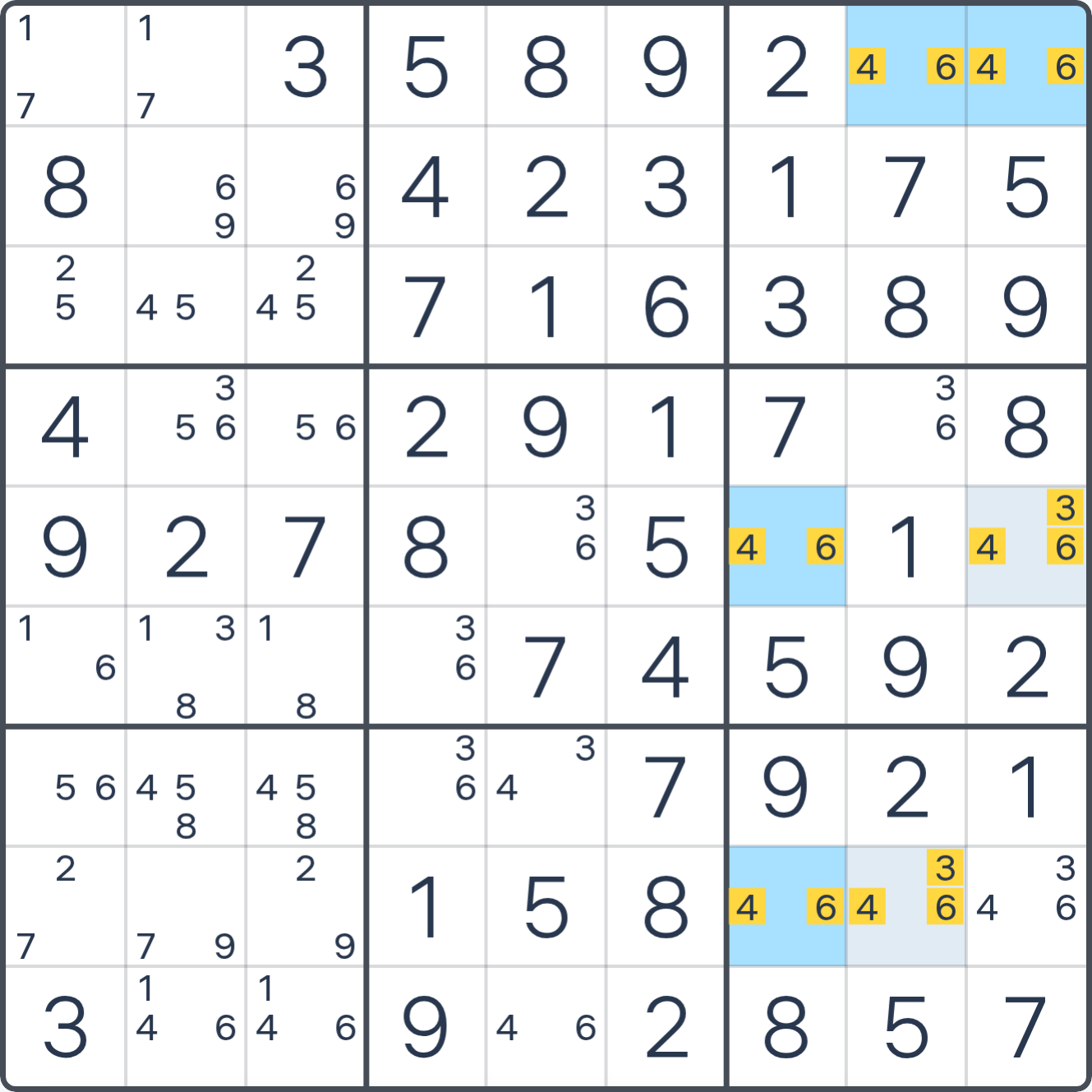
Assume this puzzle has exactly one solution and that its current candidates reflect sound deductions. The cells H1, I1, I5, G5, G8, H8 form a potential deadly Unique Loop on 4 and 6. If every one of these cells were restricted to 4 and 6, the two alternating allocations would preserve each touched row, column and box while leaving the givens fixed. Exchanging one allocation for the other would therefore prevent a unique completion. The stated uniqueness assumption requires the indicated extra candidates or additional restriction to break this deadly state. The only possible way to avoid these two configurations is if one of I5, H8 contains the value 3.
Step 3
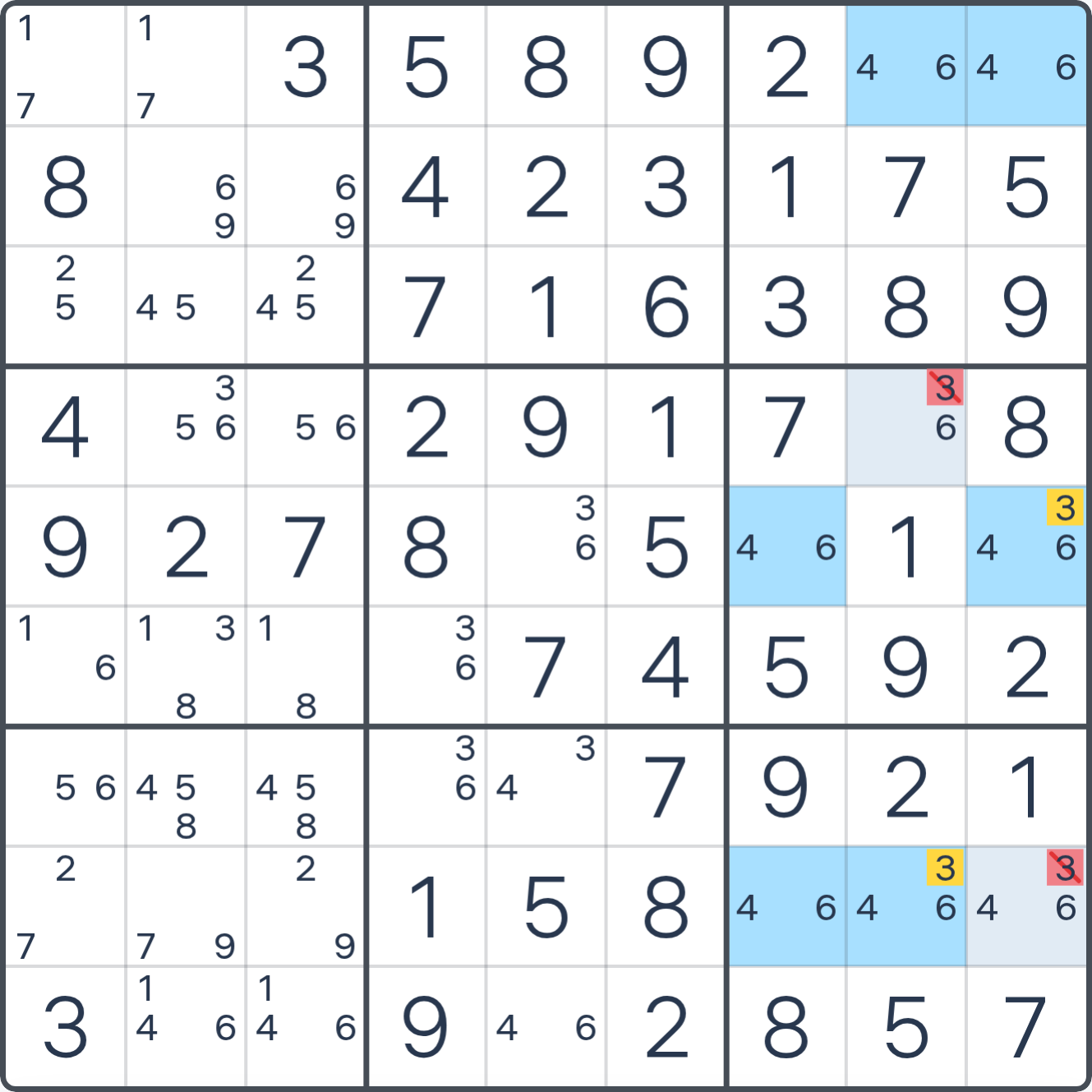
Other occurrences of 3 can therefore be removed from any cell that sees every listed rescue cell: I5, H8.
This walkthrough shows one valid example of the defined construction. Confirm the complete deadly structure, every touched house, and the rescue or guardian condition on each target before applying the same deduction to another grid. You can try our free Sudoku puzzles to practise with the current candidate state visible.
How to spot it
Verify an even loop in which each affected house contains exactly two loop cells and the two base digits can be exchanged around the loop. The rescue cells share an extra digit, and they share a house or otherwise give the proposed target visibility to every rescue occurrence. The extra digit is true in at least one rescue cell, so remove it only from candidates seeing all of them.
The logic
If no rescue cell used the shared extra digit, the complete deadly swap would remain. Therefore at least one rescue cell uses the extra digit, and a candidate seeing every possible rescue occurrence cannot use it.