Uniqueness techniques
Eliminations that exploit the guarantee of a unique solution by identifying deadly patterns (Unique Rectangles and Unique Loops) and removing the candidates that would create them.
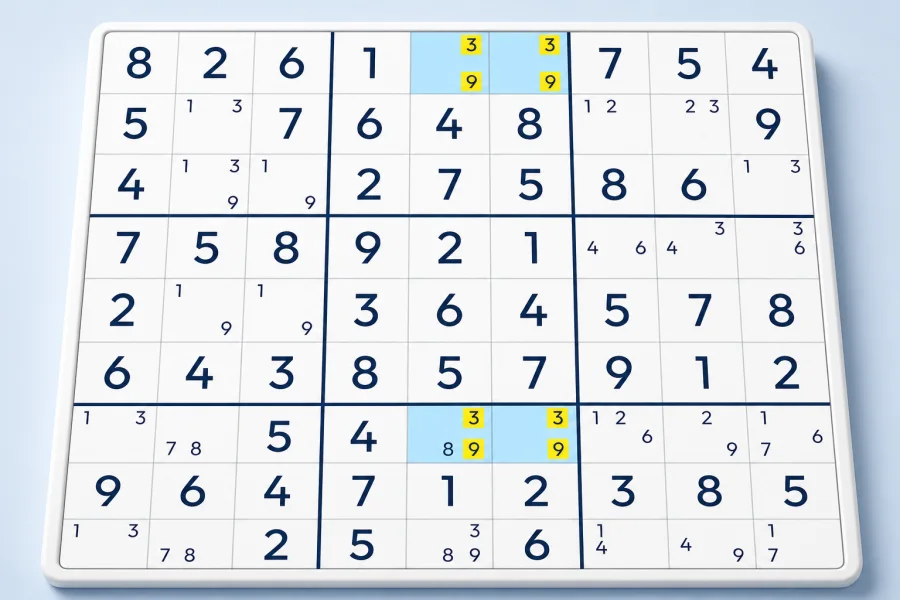
Unique Rectangle Type 1
One rescue cell contains extra candidates; the deadly pair is removed from it.
Continue Reading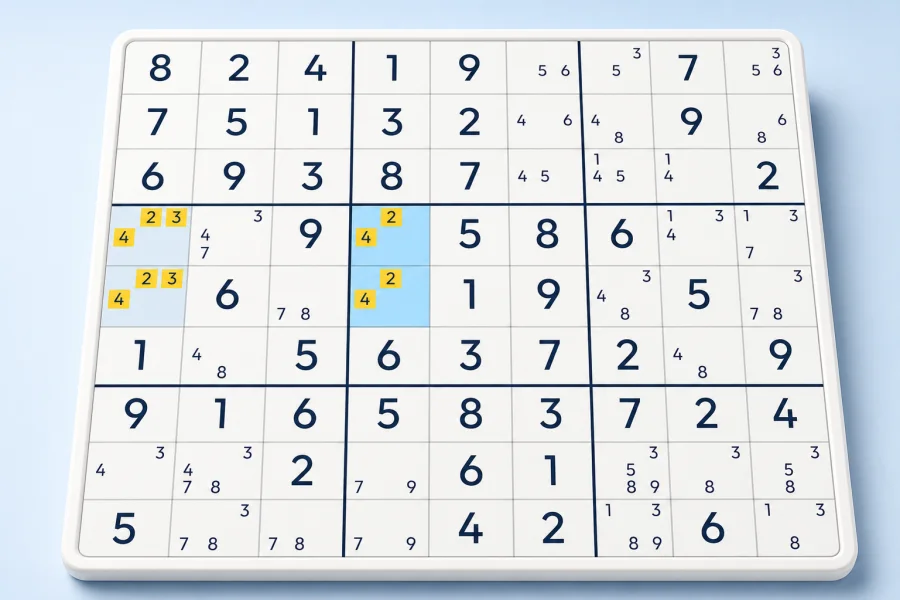
Unique Rectangle Type 2
The rectangle's rescue cells share one extra candidate that can be removed from their common peers.
Continue Reading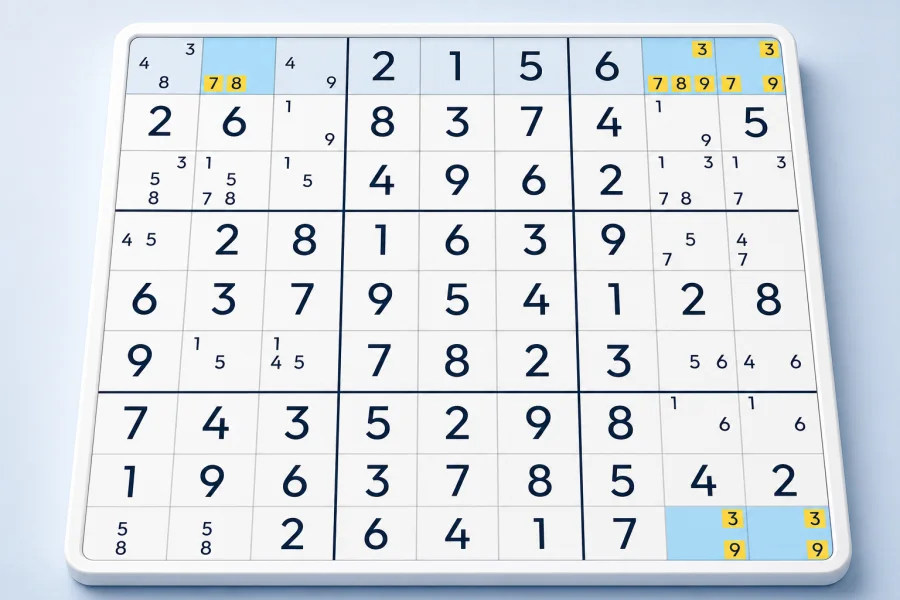
Unique Rectangle Type 3
The extra candidates combine with other cells to form a naked set in a shared house.
Continue Reading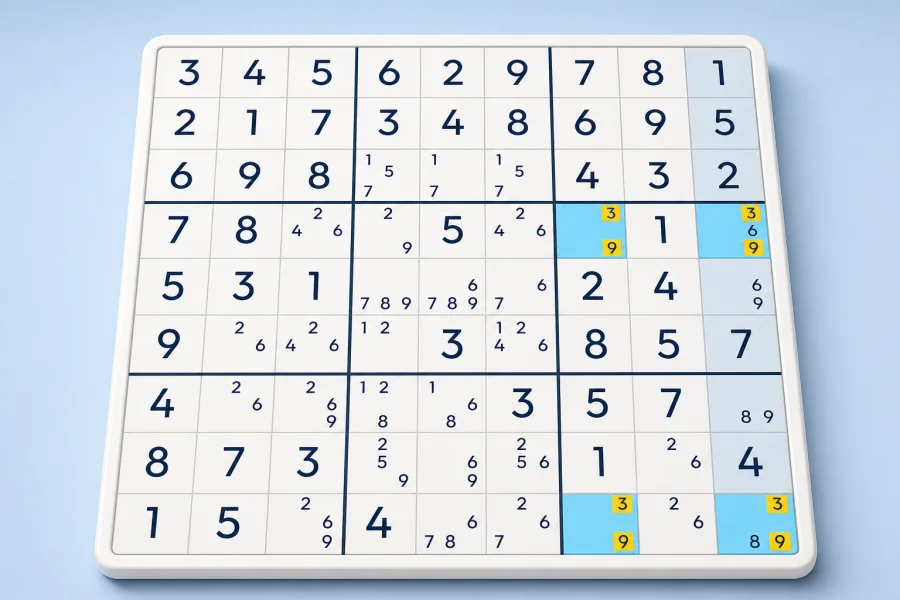
Unique Rectangle Type 4
A rectangle digit is locked into two rescue cells, allowing the other rectangle digit to be removed.
Continue Reading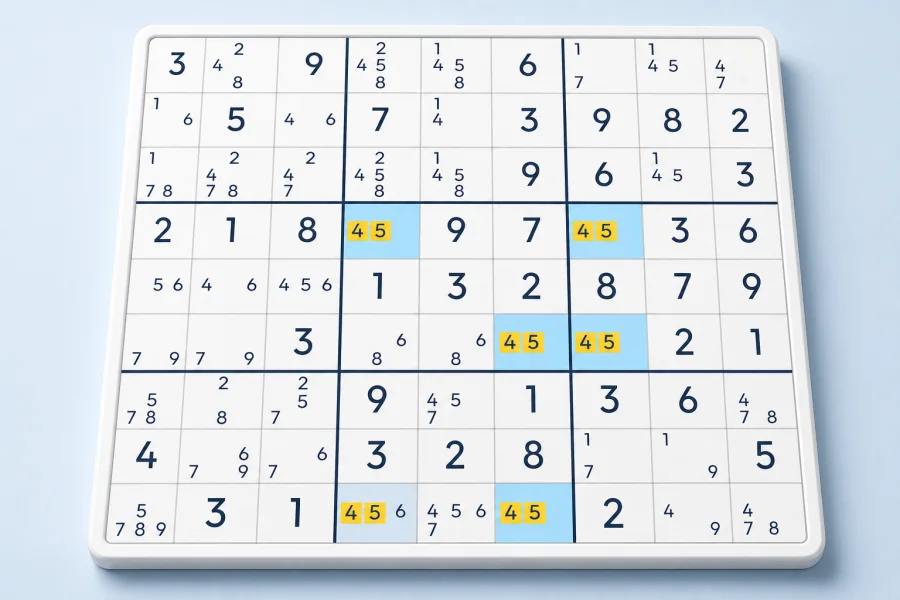
Unique Loop Type 1
A longer uniqueness loop has one rescue cell from which the deadly pair can be removed.
Continue Reading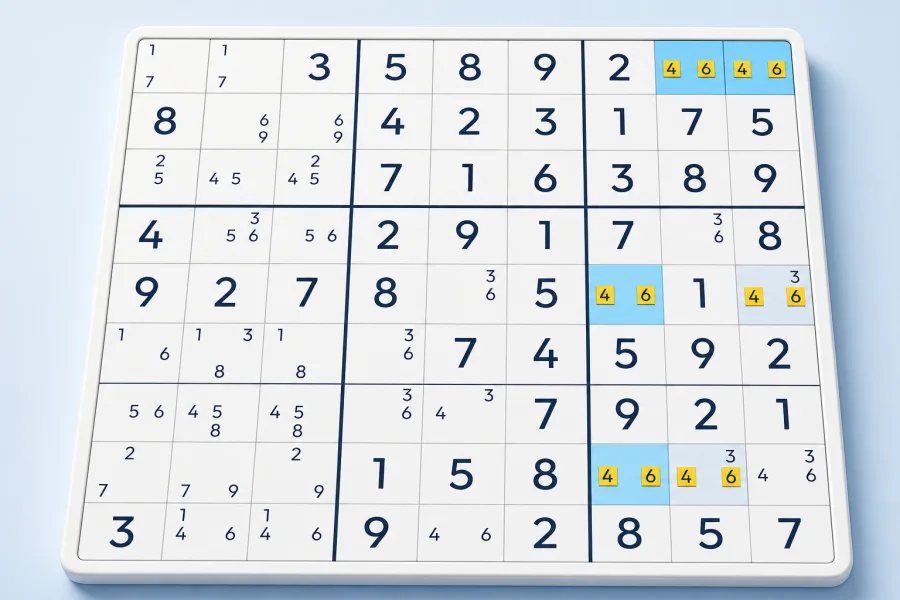
Unique Loop Type 2
Rescue cells in a longer loop share an extra candidate that eliminates from common peers.
Continue Reading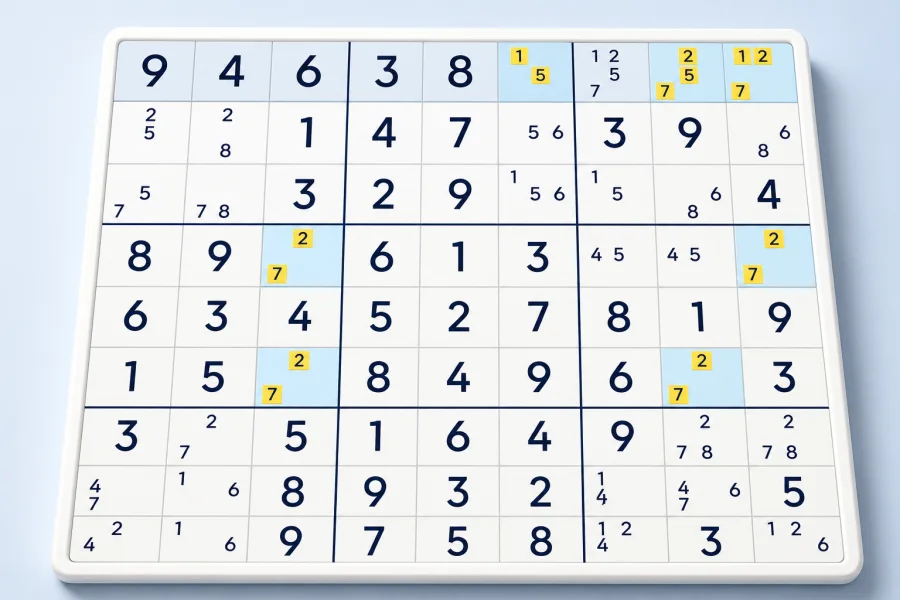
Unique Loop Type 3
Extra loop candidates form a naked set with other cells in a shared house.
Continue Reading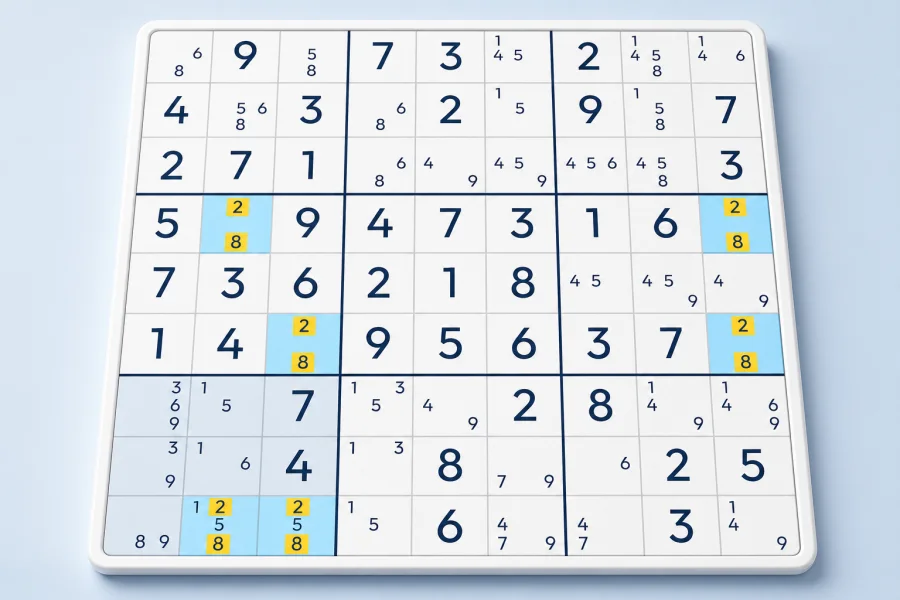
Unique Loop Type 4
One loop digit is locked into the rescue cells, so the other loop digit can be removed there.
Continue ReadingHow uniqueness-based Sudoku logic works
Uniqueness techniques apply to a properly constructed Sudoku that is guaranteed to have exactly one solution. A deadly pattern is an unresolved arrangement that could exchange two digits and produce two valid completions. A Unique Rectangle uses four cells in two rows, two columns and two boxes; a Unique Loop extends the same principle around a longer even loop. Because the deadly form cannot remain in a unique puzzle, at least one cell must break it.
The four types describe different ways those extra candidates provide a rescue. Type 1 removes the deadly pair from a single rescue cell. Types 2 and 4 exploit a shared extra candidate or a conjugate relationship, while Type 3 combines the extras with a subset in a common house. These are conditional deductions: they should be used only when puzzle uniqueness is known, not as a general substitute for contradiction testing on an arbitrary grid.