Advanced sets, fish, wings and strong links
Larger subsets (quads), bigger fish (Jellyfish), four-cell almost-locked-set wings and rings, and grouped three-link strong-link chains.
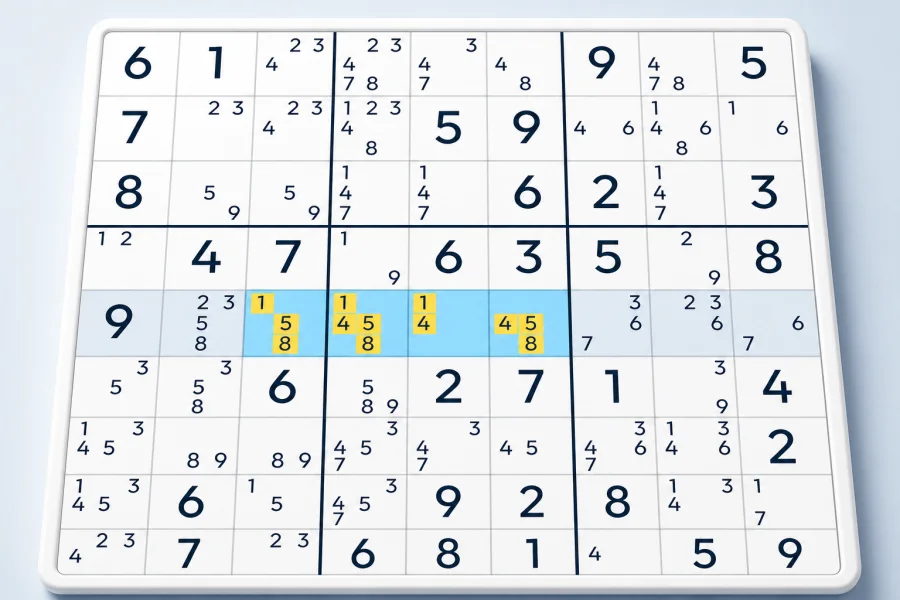
Naked Quad
Four cells restricted to four combined candidates.
Continue Reading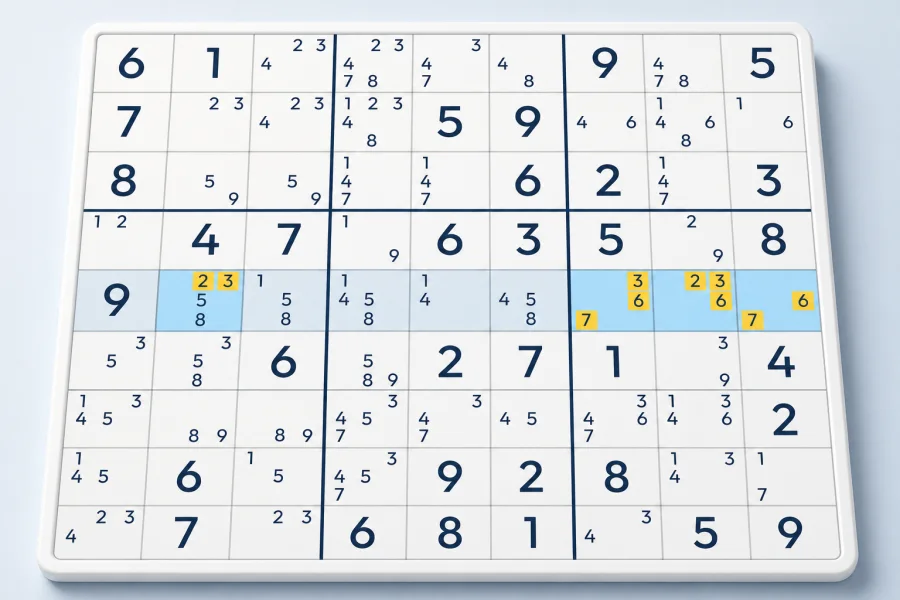
Hidden Quad
Four digits confined to four cells in one house.
Continue Reading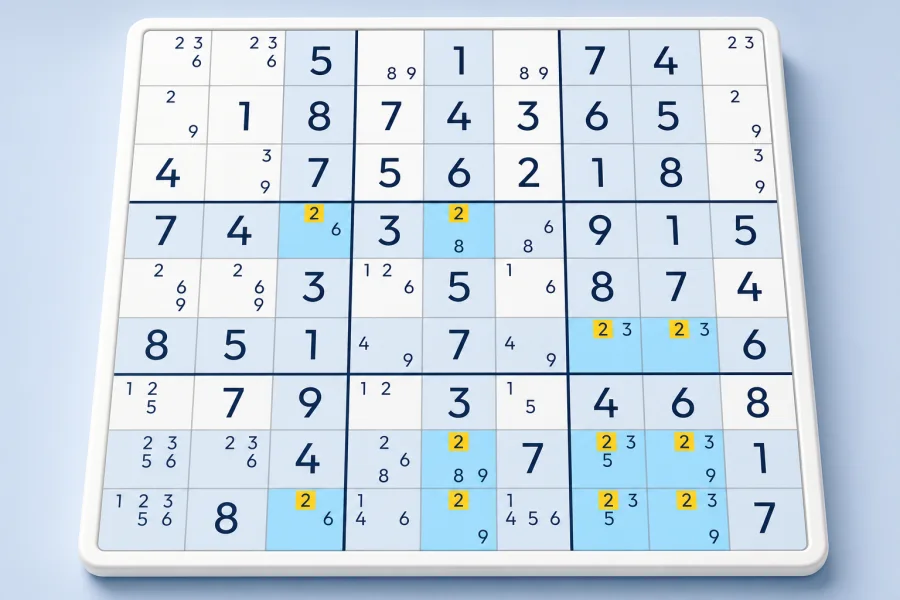
Jellyfish
A four-row or four-column fish pattern.
Continue Reading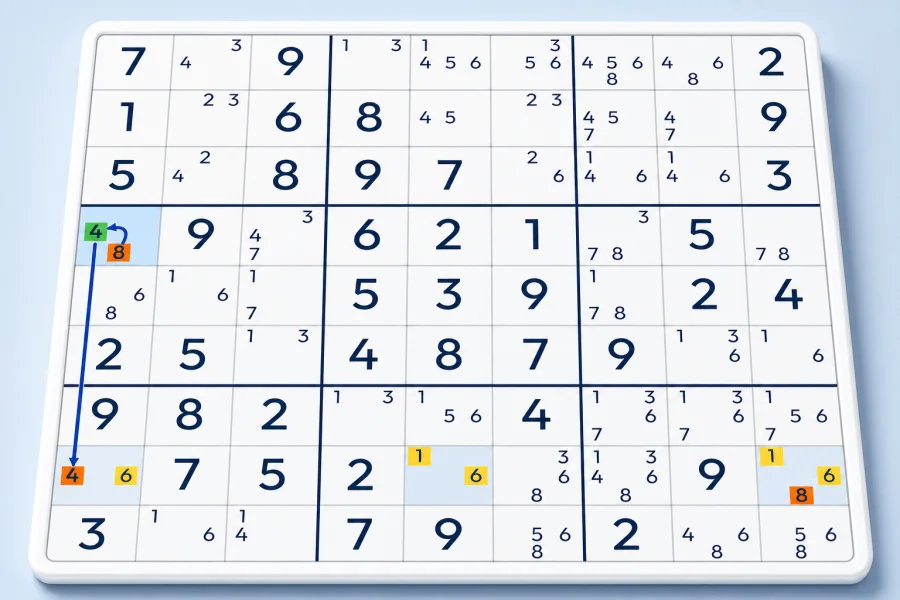
WXYZ-Wing
A single-linked four-cell almost-locked-set wing.
Continue Reading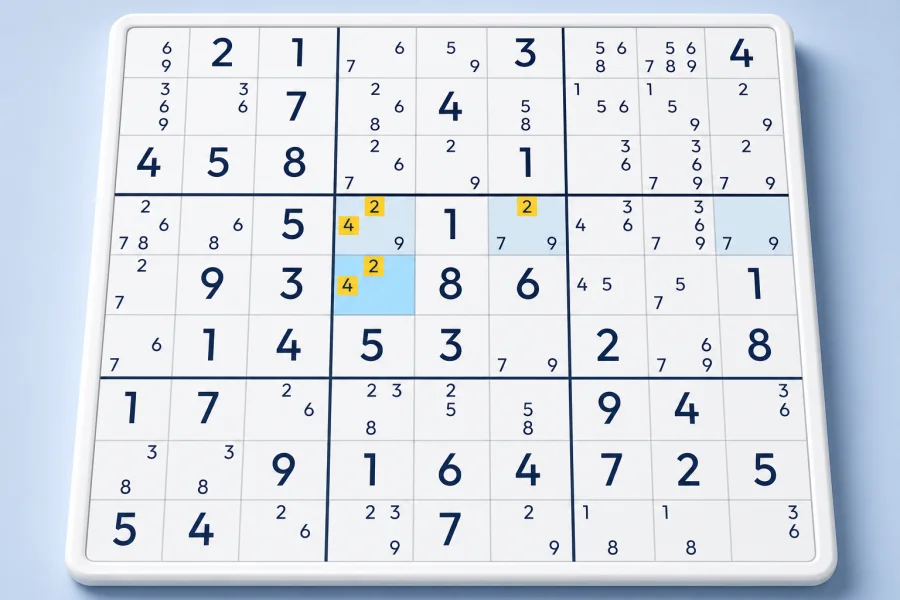
WXYZ-Ring
The double-linked WXYZ form in which both restricted commons create a loop.
Continue Reading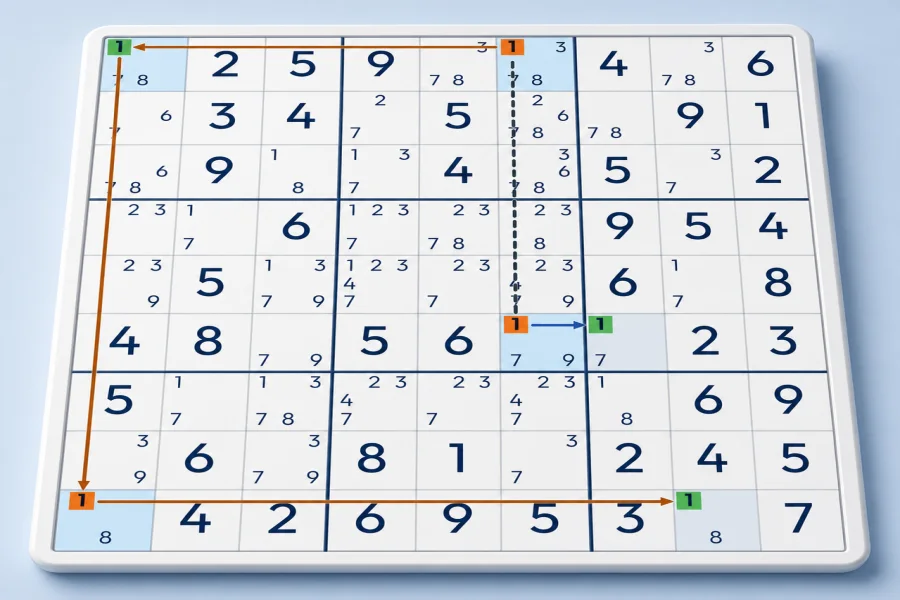
3 Skyscrapers
Three ungrouped parallel strong links connected in sequence.
Continue Reading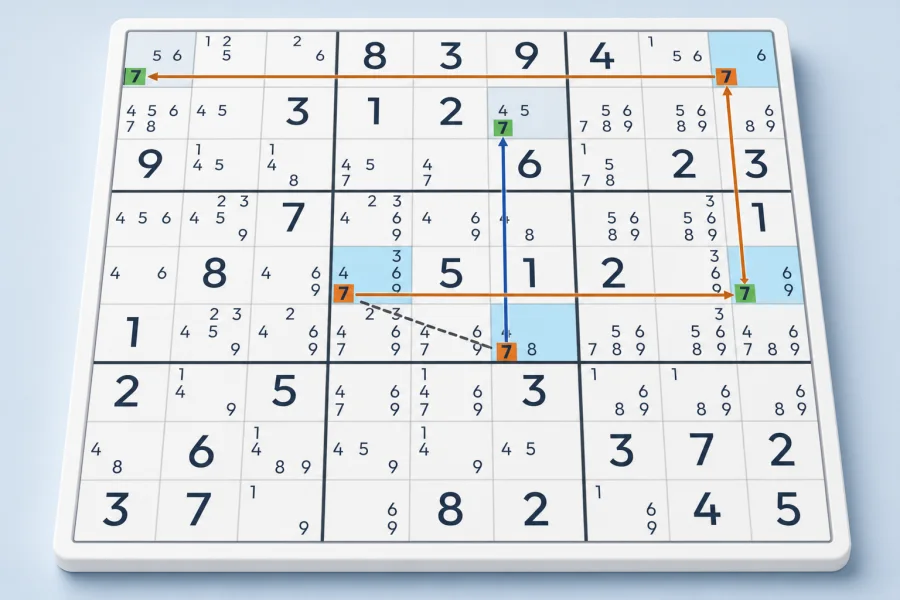
3-String Kite
Three ungrouped strong links alternating between rows and columns.
Continue Reading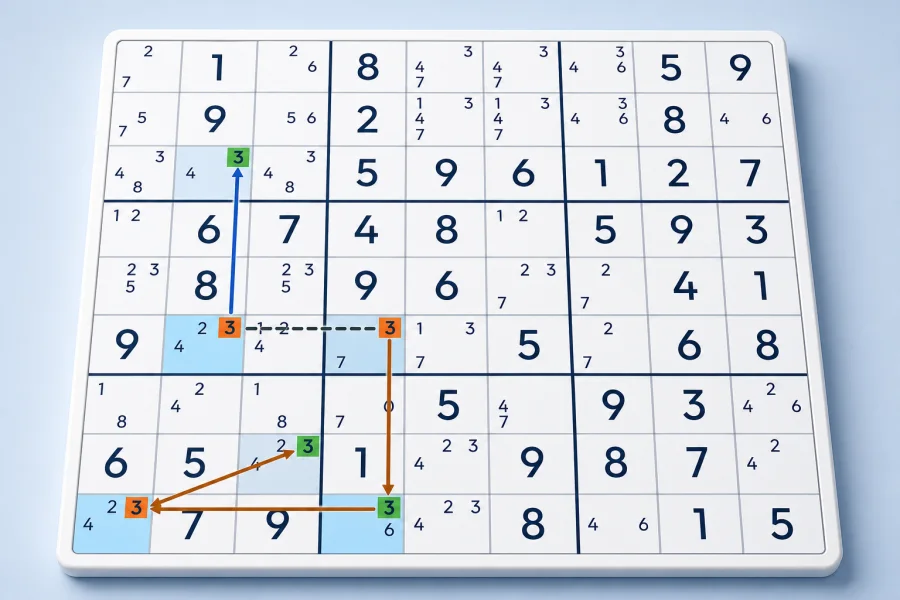
3 Strong Links
A general chain of three ungrouped conjugate pairs.
Continue Reading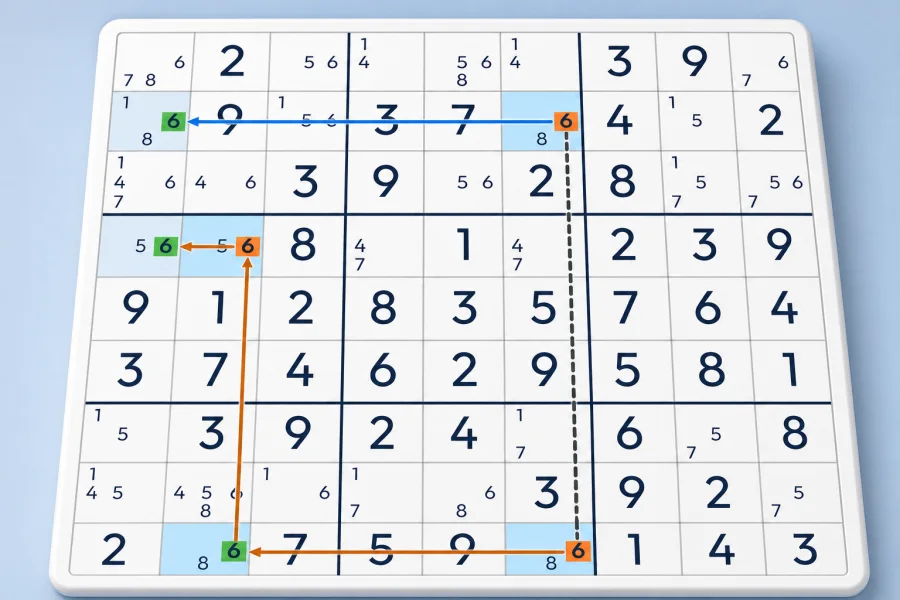
Grouped 3 Skyscrapers
A three-Skyscraper pattern containing at least one grouped strong link.
Continue Reading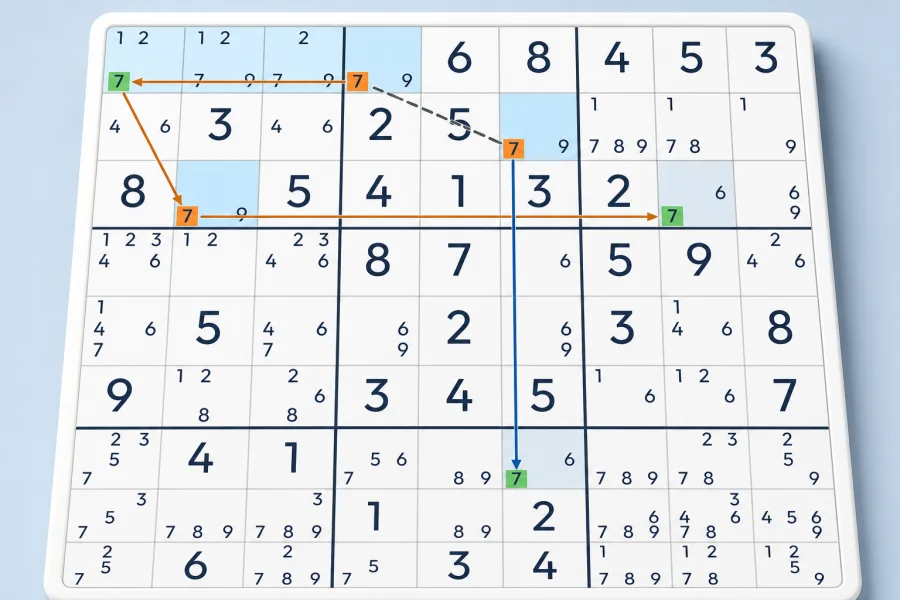
Grouped 3-String Kite
A three-string kite containing at least one grouped strong link.
Continue Reading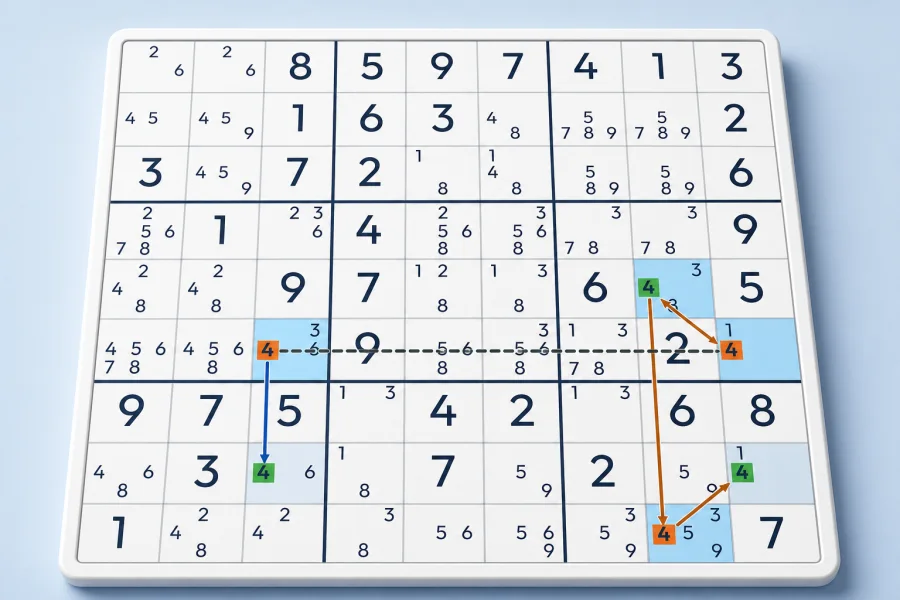
Grouped 3 Strong Links
A three-link chain containing one or more grouped conjugate links.
Continue Reading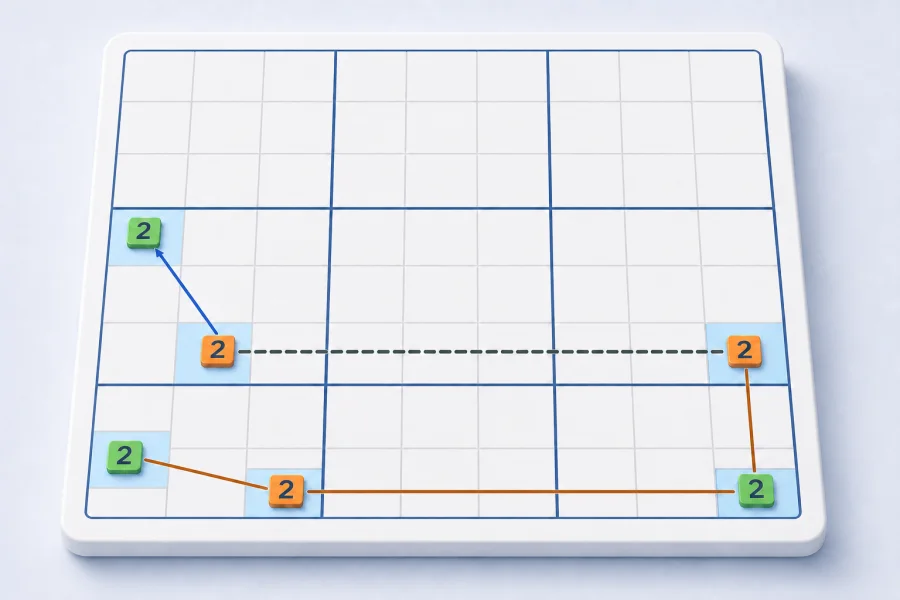
(3 Strong Links) X-Loop
Three strong links close into an ungrouped X-Loop.
Continue Reading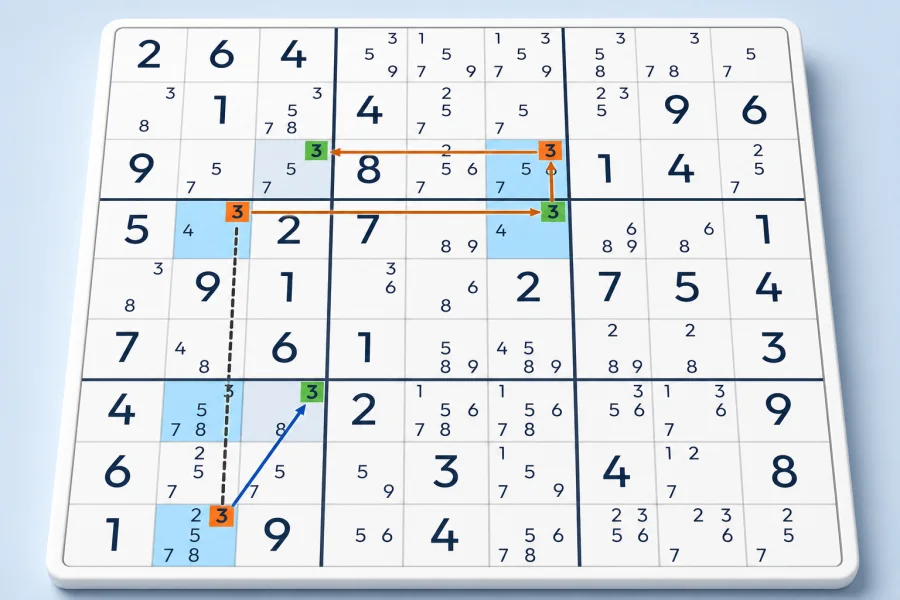
(3 Strong Links) Grouped X-Loop
Three strong links, including a grouped link, close into an X-Loop.
Continue ReadingAdvanced Sudoku pattern families
This group scales familiar logic into larger structures. Naked and Hidden Quads restrict four digits to four cells in one house. A Jellyfish is a size-four fish, distributing one candidate across four base rows and four cover columns, or vice versa. These patterns can be difficult to scan, but the proof remains the same set-based accounting used for pairs, triplets, X-Wings and Swordfish.
WXYZ-Wings and WXYZ-Rings use four-cell almost-locked-set logic: restricted common candidates connect the cells and justify eliminations from their shared peers. The remaining guides extend strong-link reasoning through three-link Skyscrapers, String Kites and X-Loops, including grouped forms where several candidates act as one logical node. Accurate house membership, candidate visibility and link direction matter more than the pattern’s visual shape; each article breaks those conditions into a verifiable deduction.