Strong links and three-cell wings
Patterns built on conjugate pairs (strong links) and three-cell wing structures that use bivalue cells to force eliminations.
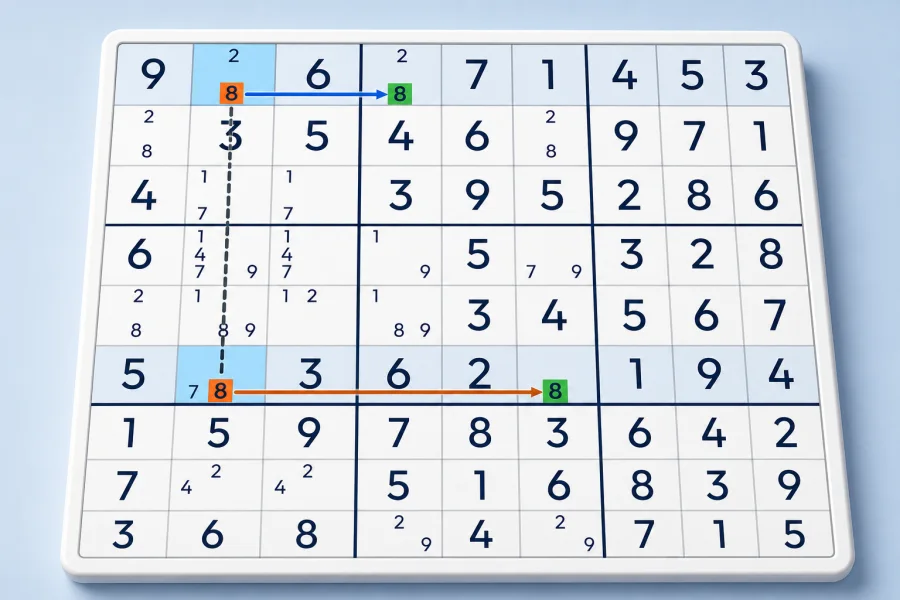
Skyscraper
Two parallel strong links with endpoints that force an elimination.
Continue Reading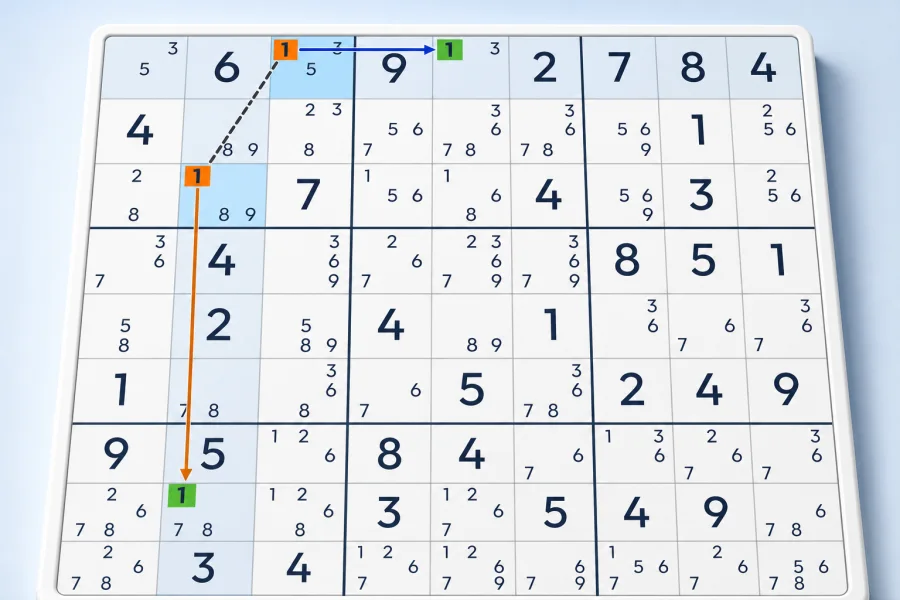
2-String Kite
A row and column strong link connected through a box.
Continue Reading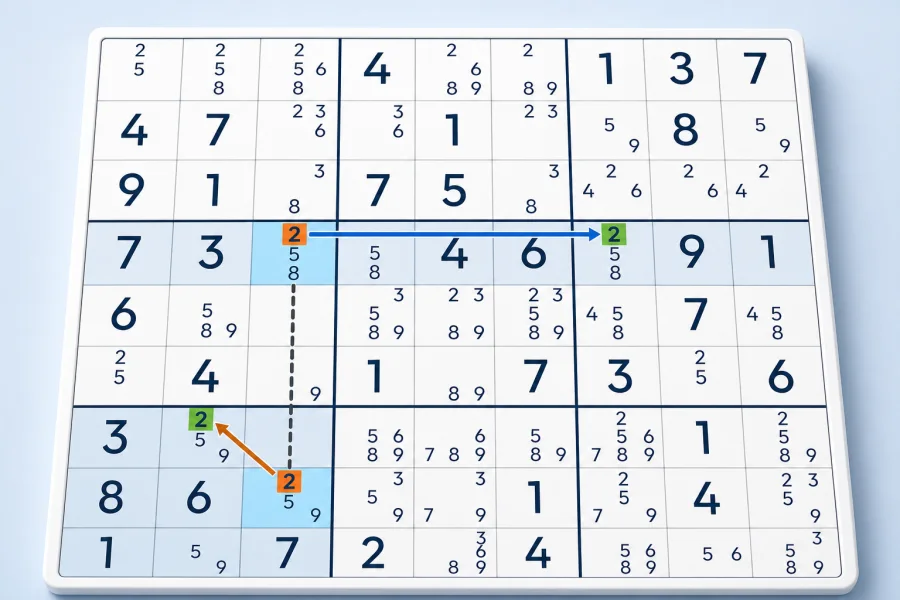
2 Strong Links
Two conjugate pairs joined by a weak link.
Continue Reading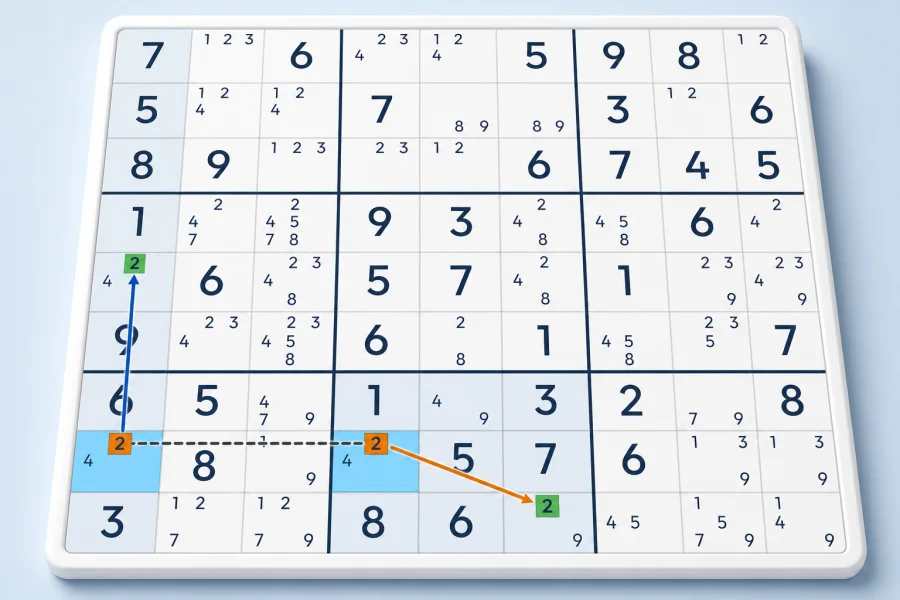
Turbot Fish
A compact single-value forcing chain with the Turbot Fish structure.
Continue Reading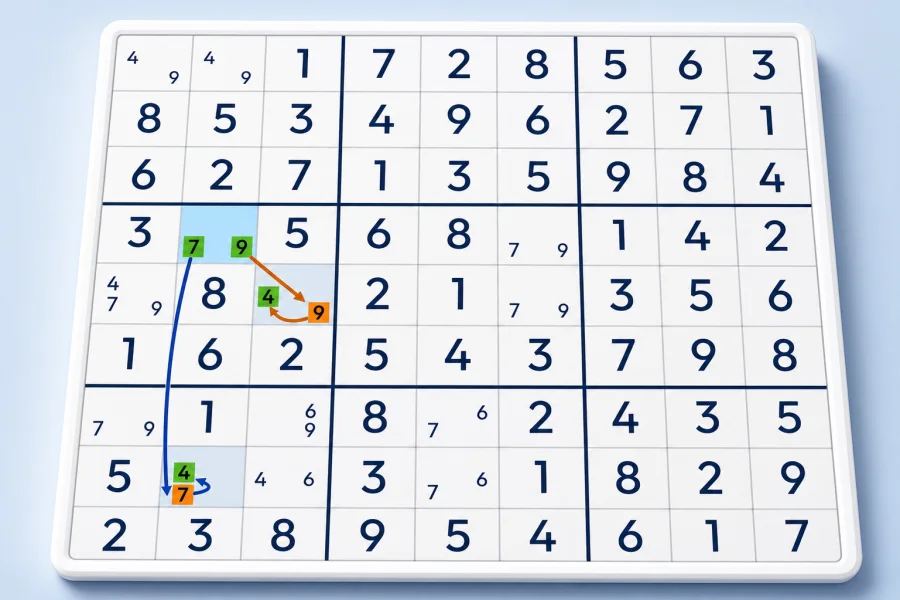
XY-Wing
A three-cell pivot-and-pincer wing.
Continue Reading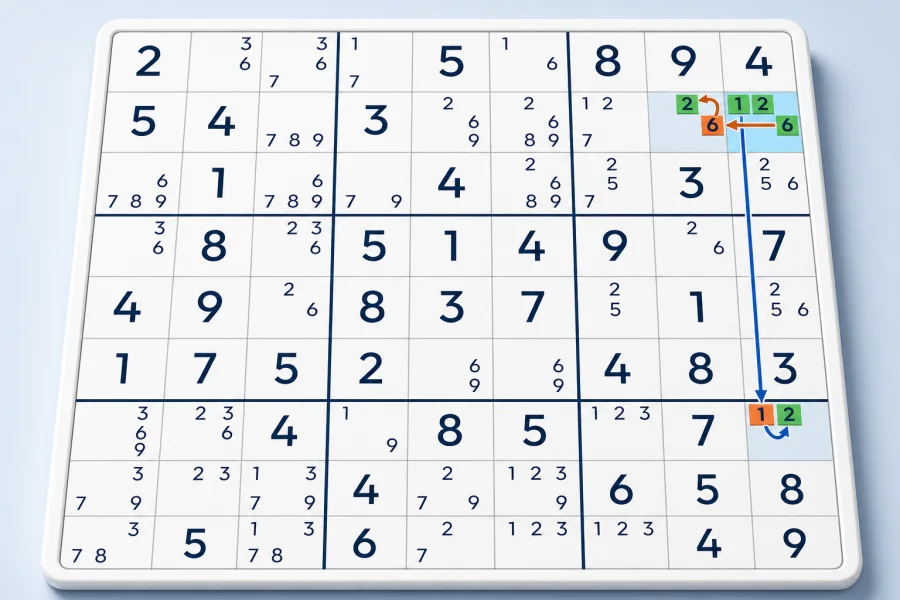
XYZ-Wing
A three-cell wing with a three-candidate pivot.
Continue ReadingStrong links, conjugate pairs and wing logic
For one candidate digit, a strong link exists when a house contains exactly two possible positions: if one is false, the other must be true. Skyscrapers, 2-String Kites, 2 Strong Links and Turbot Fish connect conjugate pairs through cells that see one another. Their shapes differ, but their conclusion is the same: at least one endpoint must contain the digit, so any outside cell that sees both endpoints cannot contain it.
XY-Wing and XYZ-Wing transfer this either-or reasoning to three cells. A pivot links two pincers through carefully matched candidate sets. Whichever value the pivot ultimately takes, a shared elimination candidate is forced in one of the pincers; that candidate can therefore be removed from cells that see every possible source. These guides identify the exact visibility and candidate conditions, which is crucial because a similar-looking arrangement is not automatically a valid wing.