Intersections, subsets and fish
Elimination techniques based on locked candidates, naked and hidden subsets, and basic fish patterns (X-Wing, Swordfish).
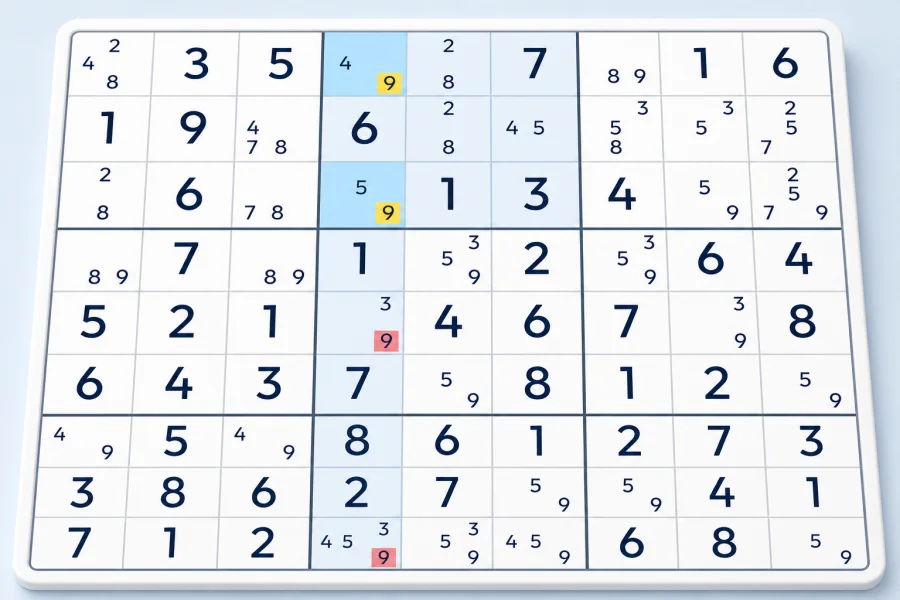
Pointing
Box-to-line candidate restriction and elimination.
Continue Reading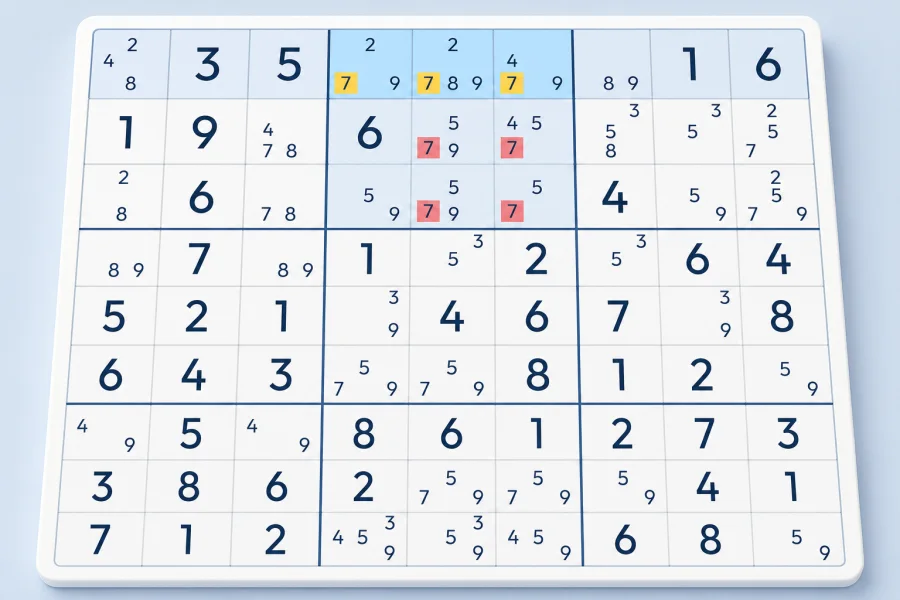
Claiming
Line-to-box candidate restriction and elimination.
Continue Reading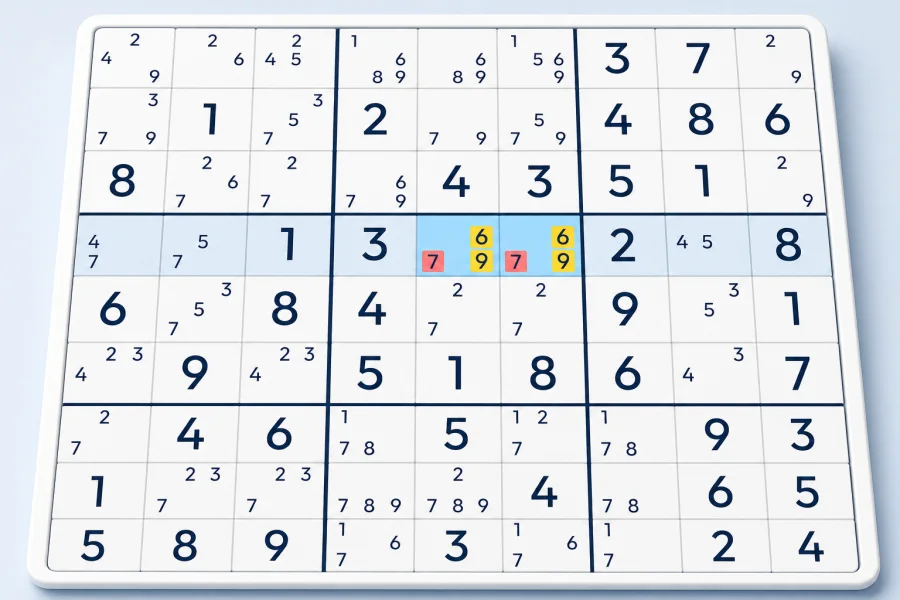
Hidden Pair
Two digits restricted to two cells in one house.
Continue Reading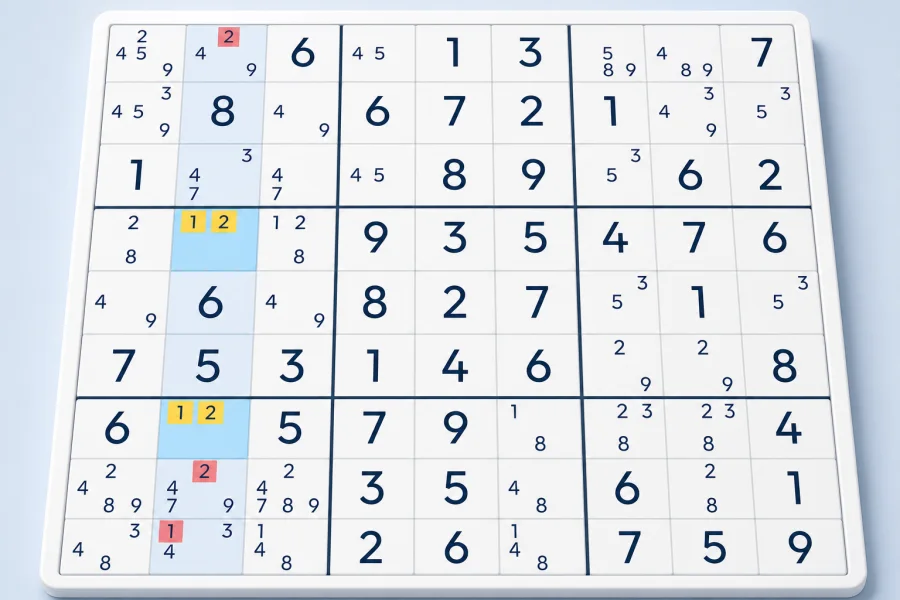
Naked Pairs
Two matching two-candidate cells that eliminate peers.
Continue Reading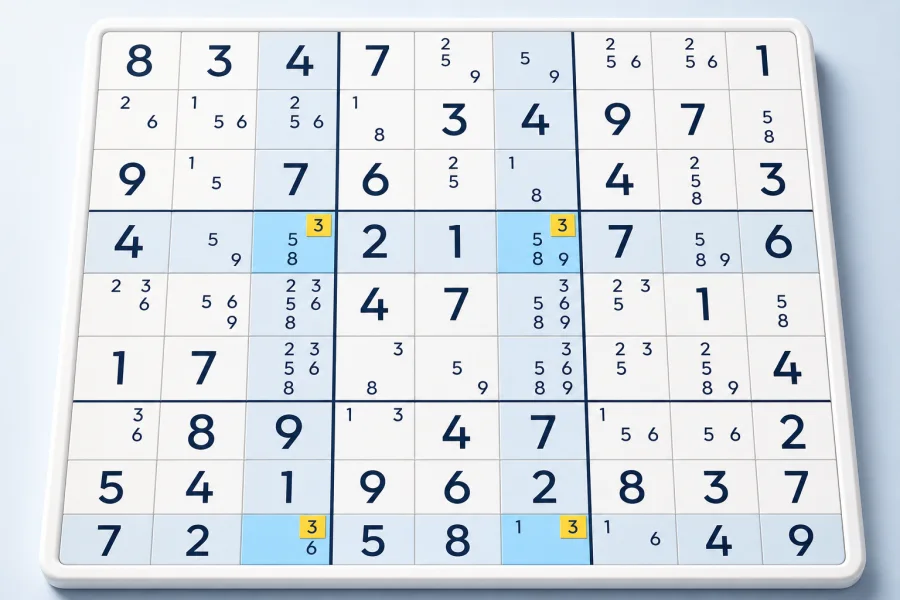
X-Wing
A two-row or two-column fish pattern.
Continue Reading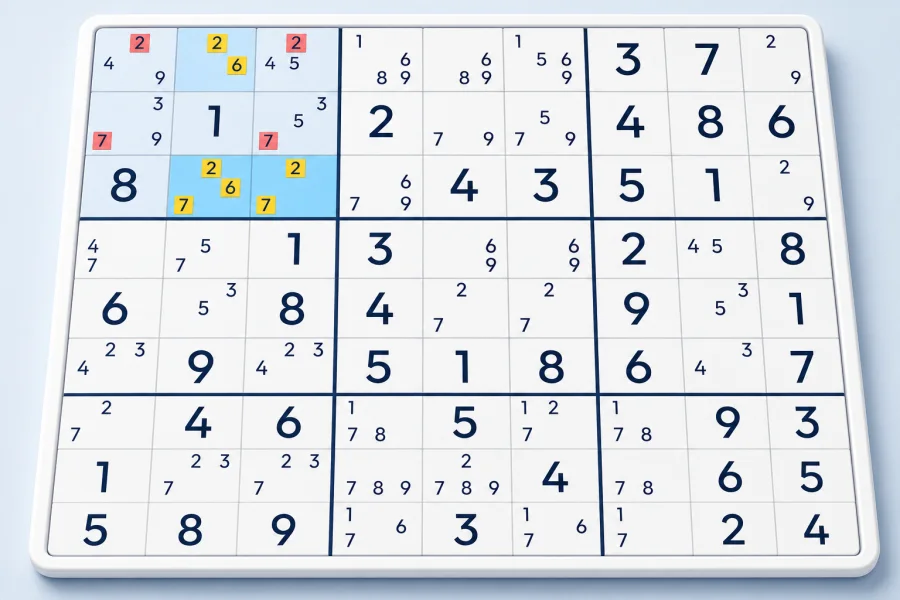
Naked Triplet
Three cells containing only three combined candidates.
Continue Reading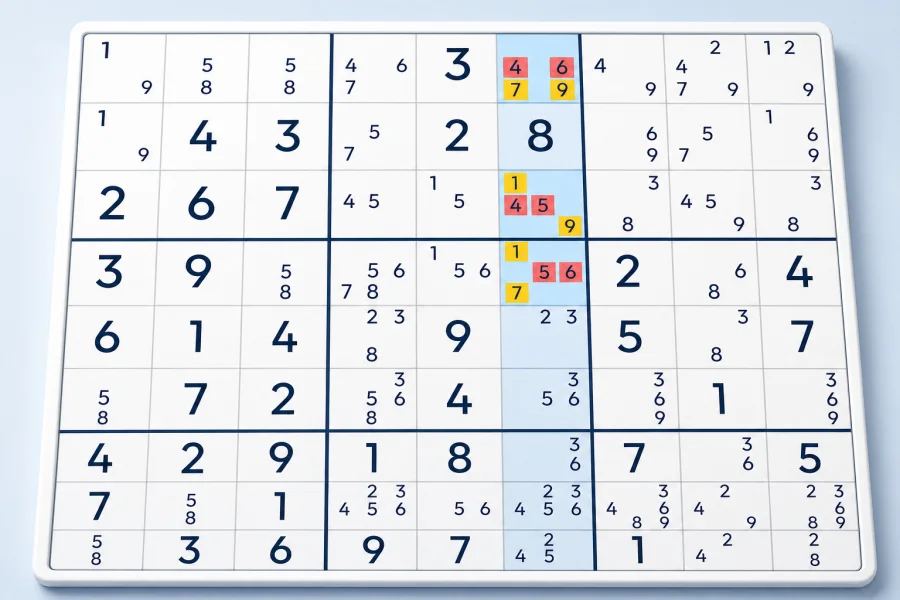
Hidden Triplet
Three digits confined to three cells in one house.
Continue Reading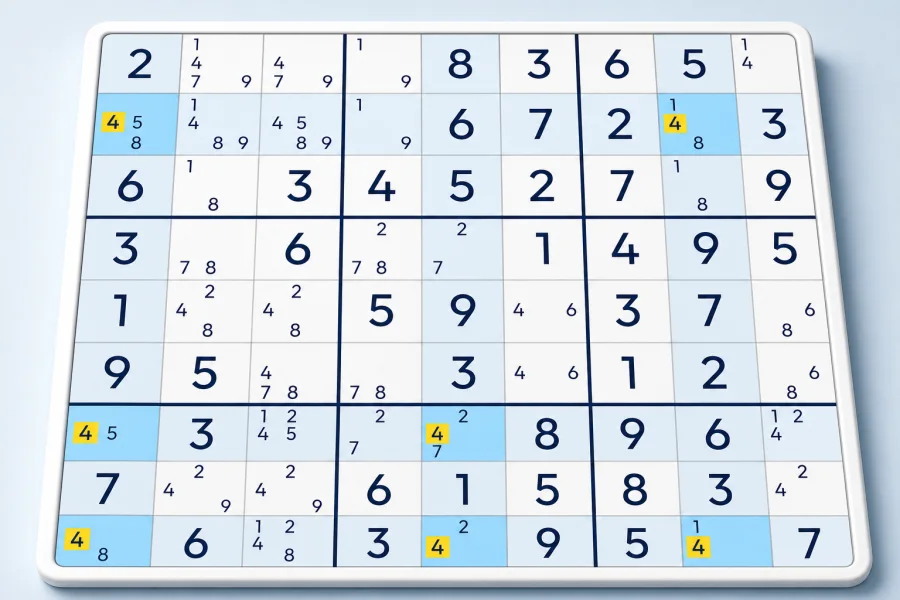
Swordfish
A three-row or three-column fish pattern.
Continue ReadingCandidate restrictions across Sudoku houses
These strategies eliminate candidates by proving that a set of digits is confined to particular cells or houses. Pointing and Claiming, collectively known as locked candidates, use the overlap between a 3×3 box and a row or column. Naked and hidden pairs or triplets apply the same conservation principle inside one house: when n digits are restricted to n cells, those cells or digits can be separated from the remaining candidates.
X-Wing and Swordfish extend that logic across several rows and columns. An X-Wing confines one digit to the same two columns in two rows (or the transposed arrangement), while a Swordfish uses three base houses and three cover houses. The eliminations are valid because the selected digit must occupy the pattern’s cover positions. Studying these methods together makes the shared structure visible and prepares solvers for larger fish and more complex candidate networks.