Cycles and forcing chains
Closed forcing-chain loops (cycles) and open forcing chains of increasing complexity, from simple single-value chains through dynamic and nested reasoning.
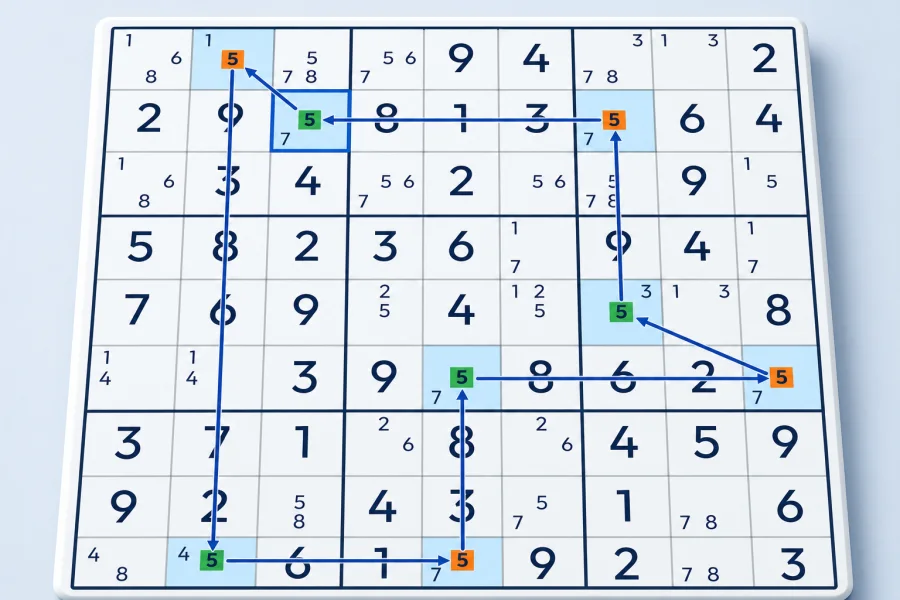
Bidirectional X-Cycle
A closed single-value forcing-chain loop traversed in both directions.
Continue Reading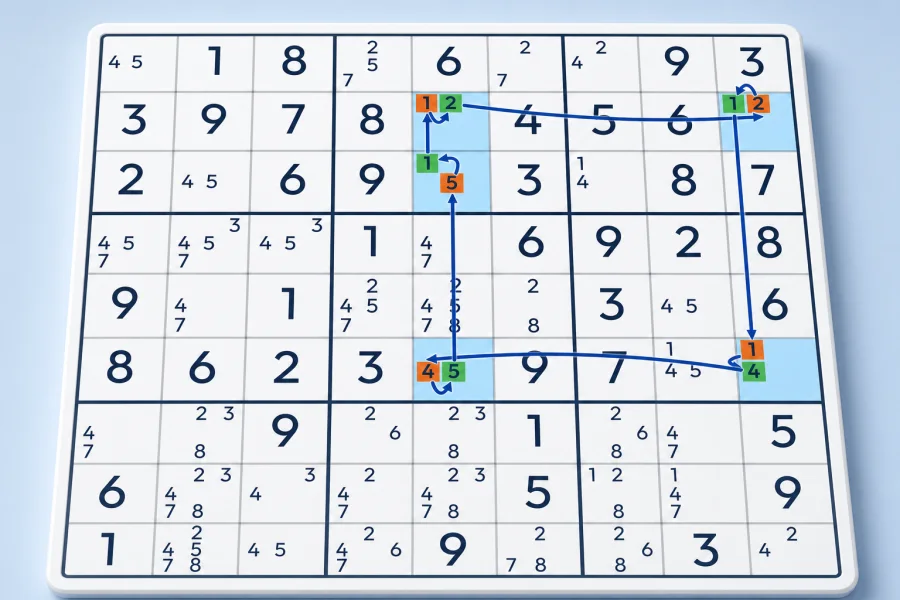
Bidirectional Y-Cycle
A closed bivalue-cell forcing-chain loop traversed in both directions.
Continue Reading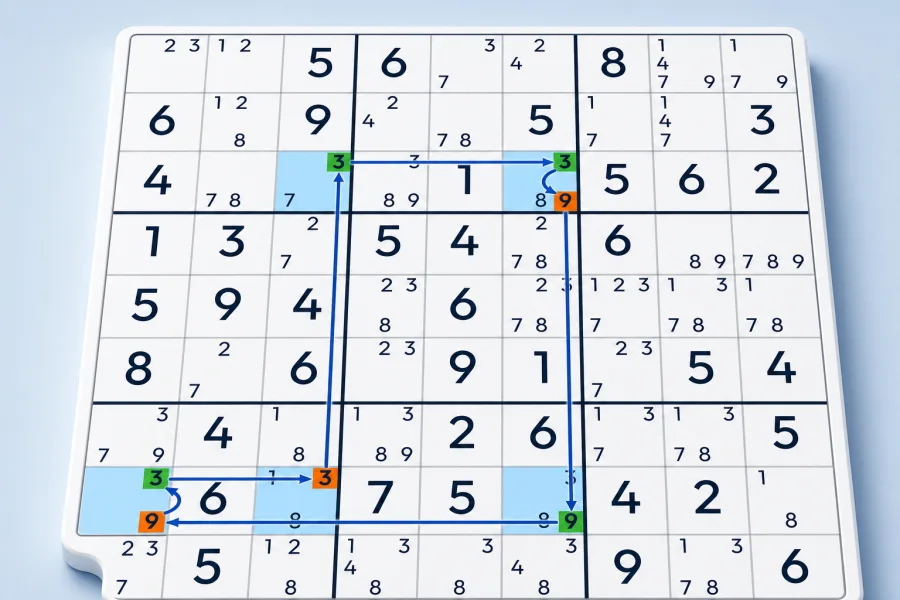
Bidirectional Cycle (XY-Cycle)
A closed mixed X/Y forcing-chain loop with two possible configurations.
Continue Reading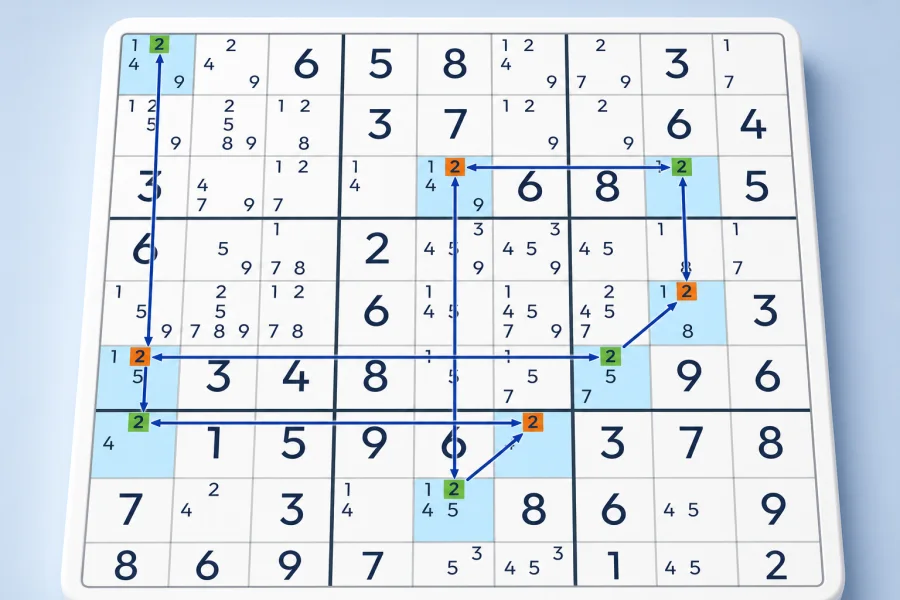
Forcing X-Chain
An open forcing chain using a single candidate value.
Continue Reading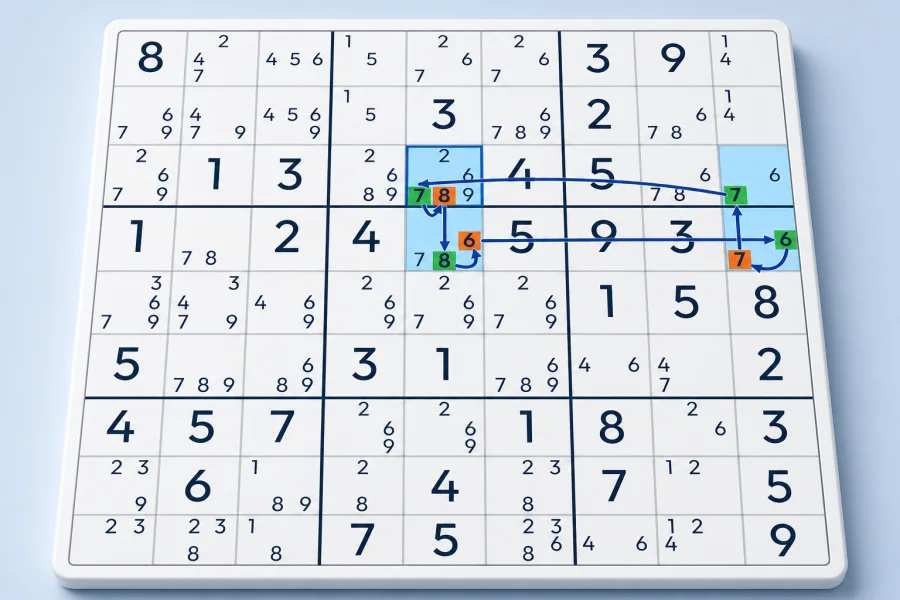
Forcing Chain
An open mixed X/Y implication chain that proves a placement or elimination.
Continue Reading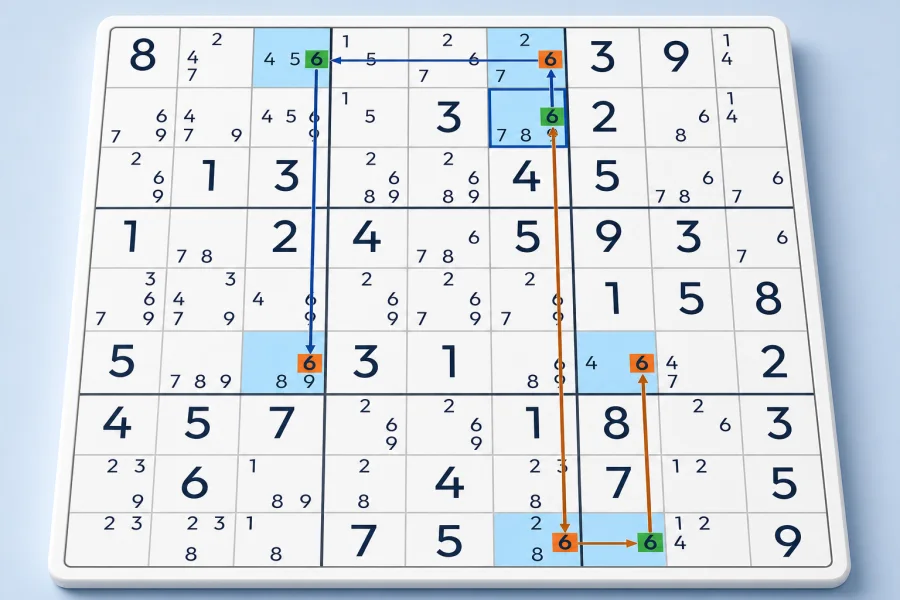
Nishio Forcing Chain
A single-value assumption is disproved by a contradiction.
Continue Reading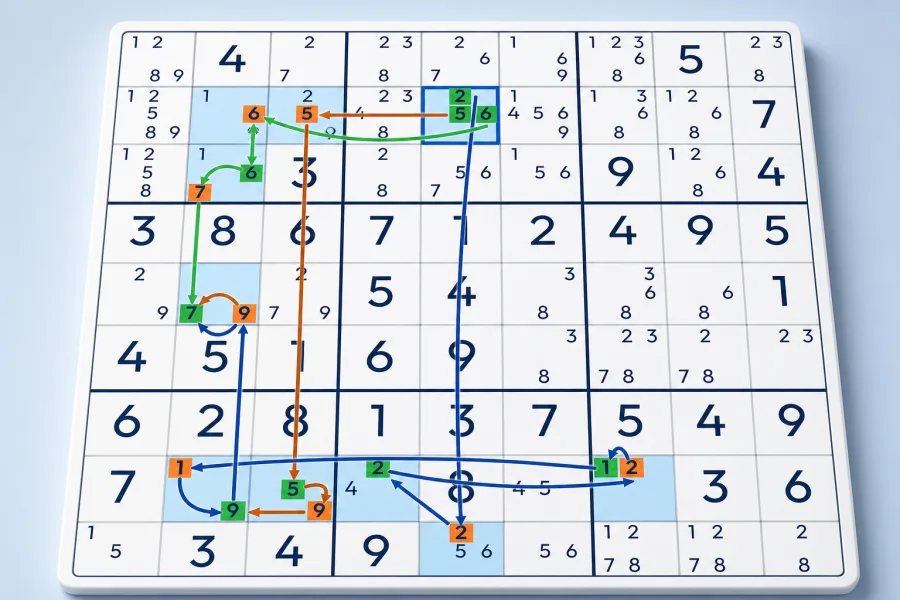
Cell Forcing Chain
Every candidate in one source cell leads to the same conclusion.
Continue Reading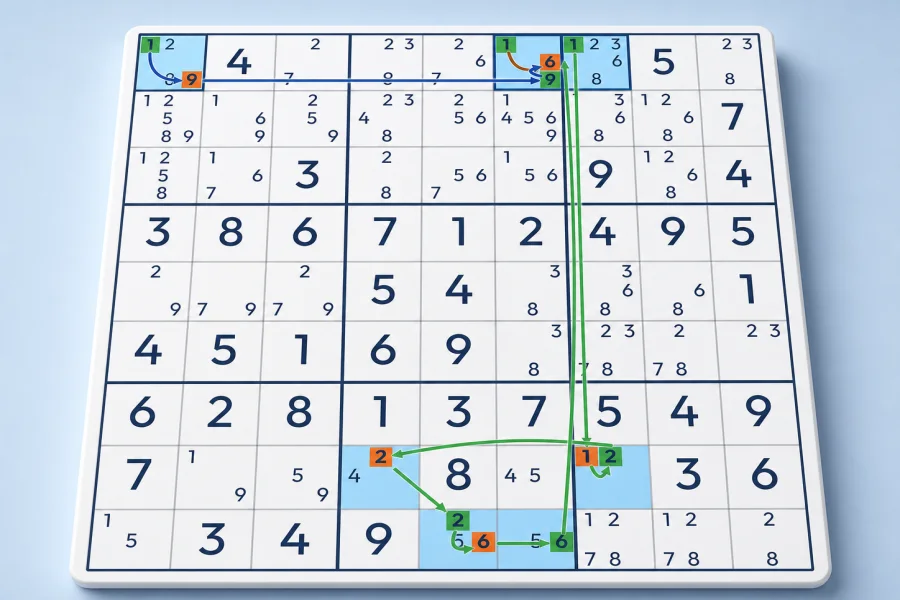
Region Forcing Chain
Every possible position for a digit in one house leads to the same conclusion.
Continue Reading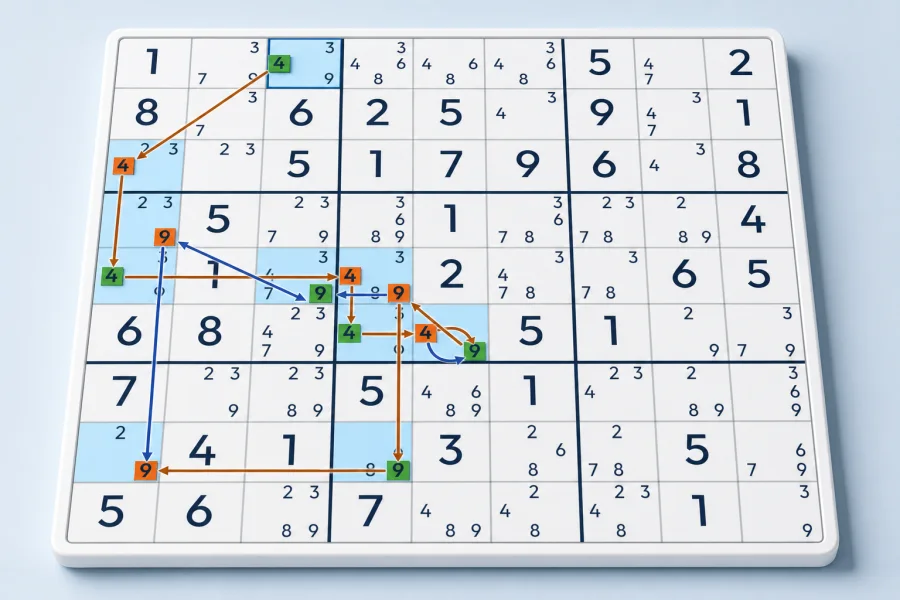
Dynamic Forcing Chain
Candidate consequences discovered during the chain create new implications.
Continue ReadingReading Sudoku cycles and forcing chains
Forcing chains follow logical implications between candidates: if one candidate is true, another must be false, which may force a third candidate true, and so on. Strong links supply an “at least one is true” relationship; weak links show that two candidates cannot both be true. When these implications close into a loop, an X-Cycle, Y-Cycle or mixed XY-Cycle can prove an elimination or placement from the link configuration.
Open chains reach a conclusion shared by every relevant branch or expose a contradiction in one assumption. A Forcing X-Chain follows one digit, while mixed Forcing Chains can move between digits. Nishio tests a candidate against the placement rules for one value. Cell and Region Forcing Chains begin from every candidate in a cell or every position for a digit in a house; any consequence common to all branches is true. Dynamic chains go further by using new implications discovered during the analysis. The individual guides keep every premise and consequence visible so the result can be checked as logic, not guesswork.