BUG and larger ALS wings
Bivalue Universal Grave patterns and five-to-seven-cell almost-locked-set wings and rings.
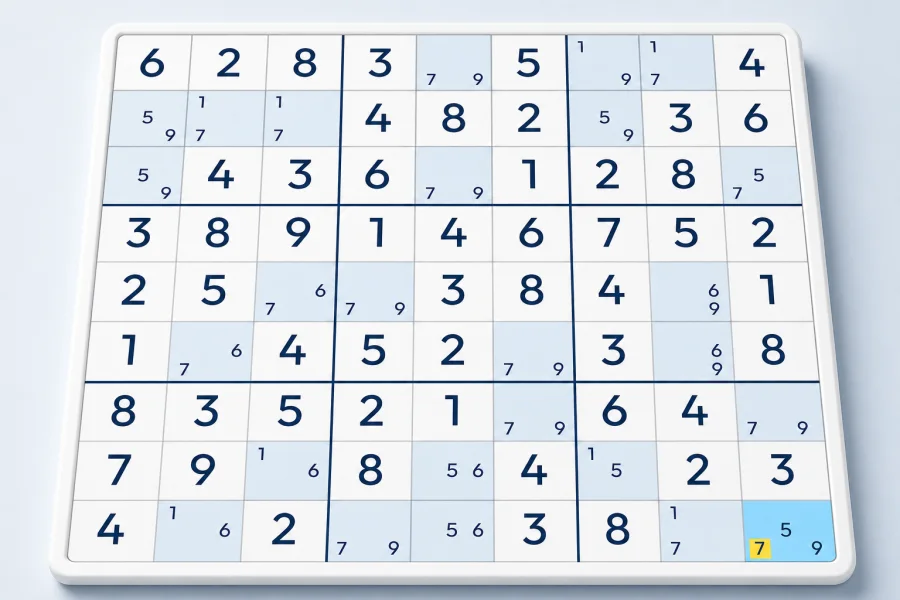
BUG Type 1
One non-bivalue cell breaks the BUG state and its non-extra candidates can be removed.
Continue Reading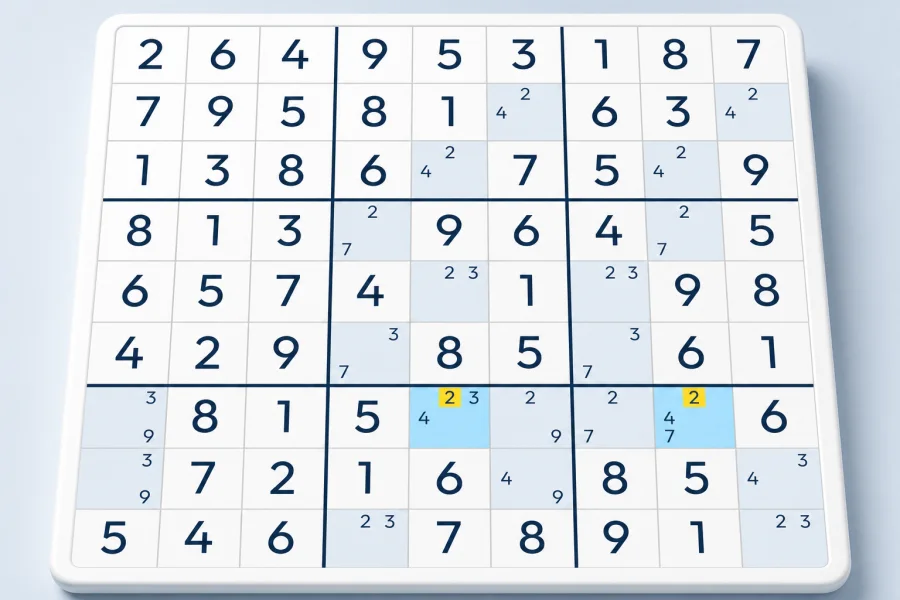
BUG Type 2
Several BUG cells share one extra value, eliminating that value from their common peers.
Continue Reading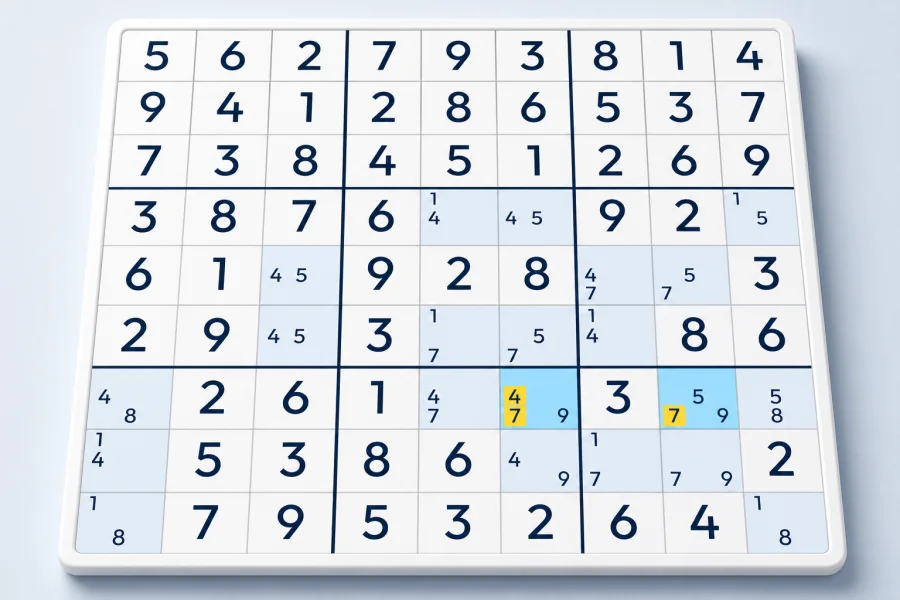
BUG Type 3
BUG values combine with nearby cells to form a naked set in a shared house.
Continue Reading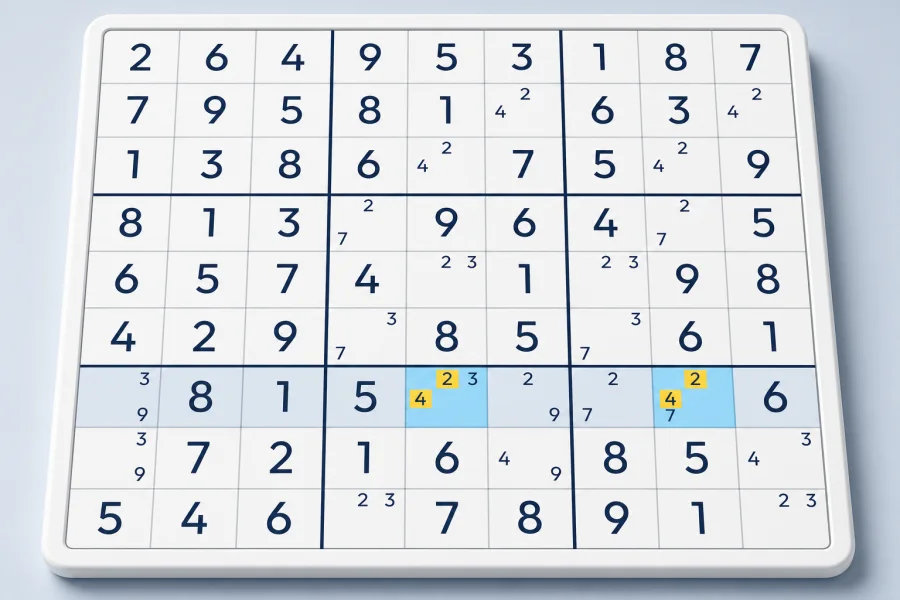
BUG Type 4
Two BUG cells lock an additional candidate in their shared house.
Continue Reading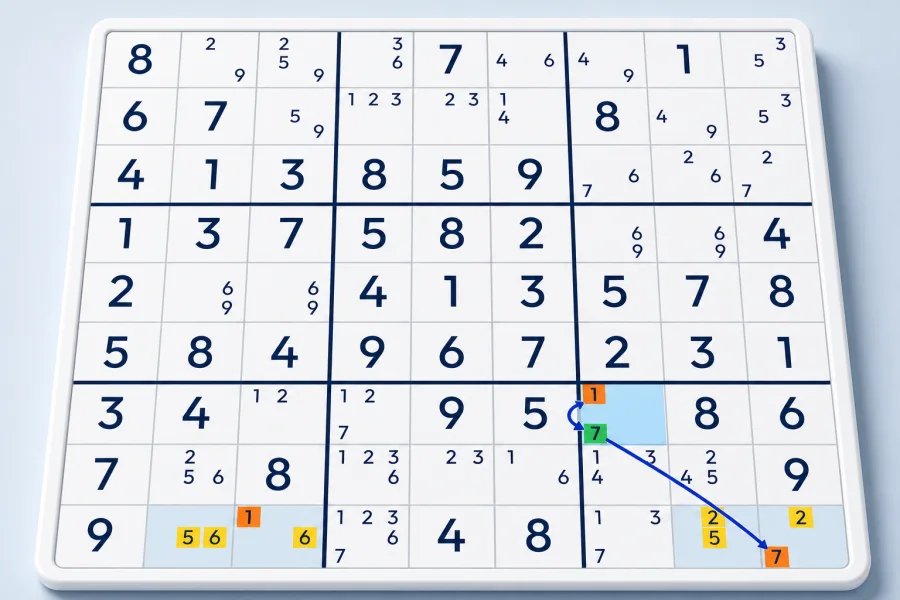
VWXYZ-Wing
A single-linked five-cell almost-locked-set wing.
Continue Reading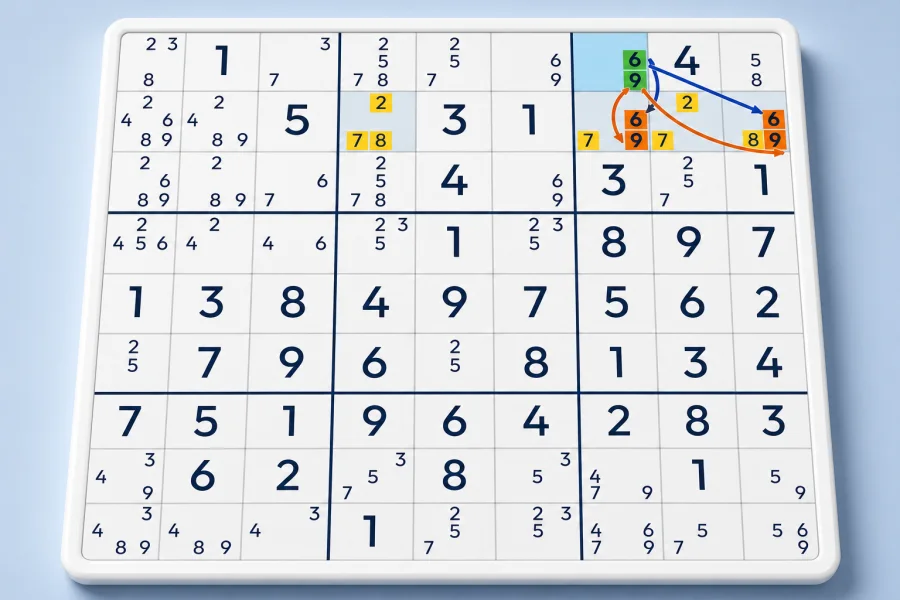
VWXYZ-Ring
The double-linked five-cell form with two restricted commons.
Continue Reading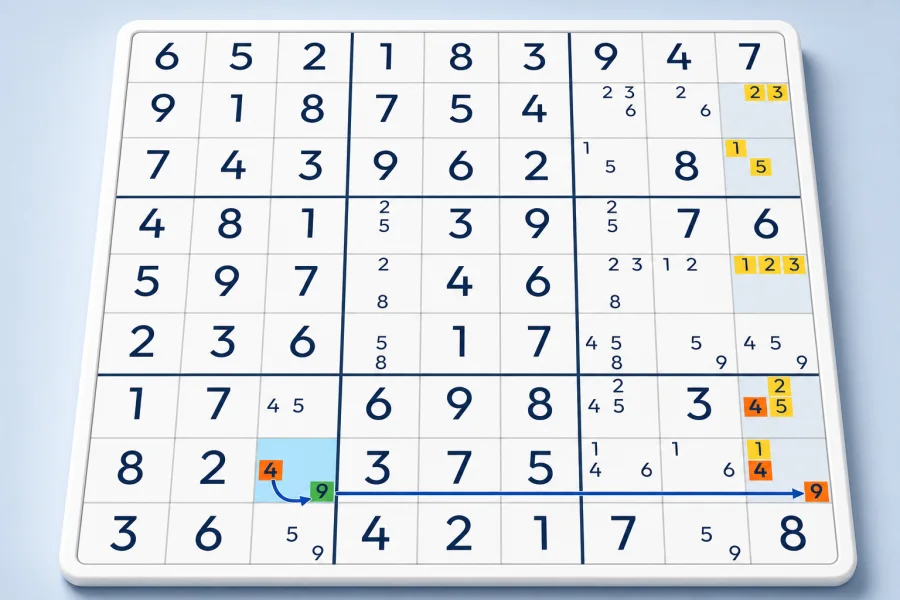
UVWXYZ-Wing
A single-linked six-cell almost-locked-set wing.
Continue Reading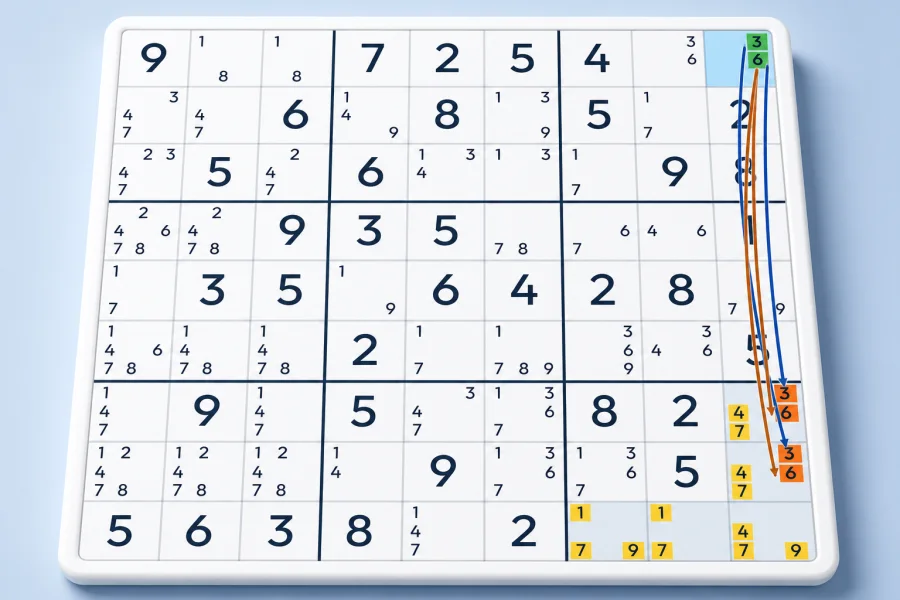
UVWXYZ-Ring
The double-linked six-cell form with two restricted commons.
Continue Reading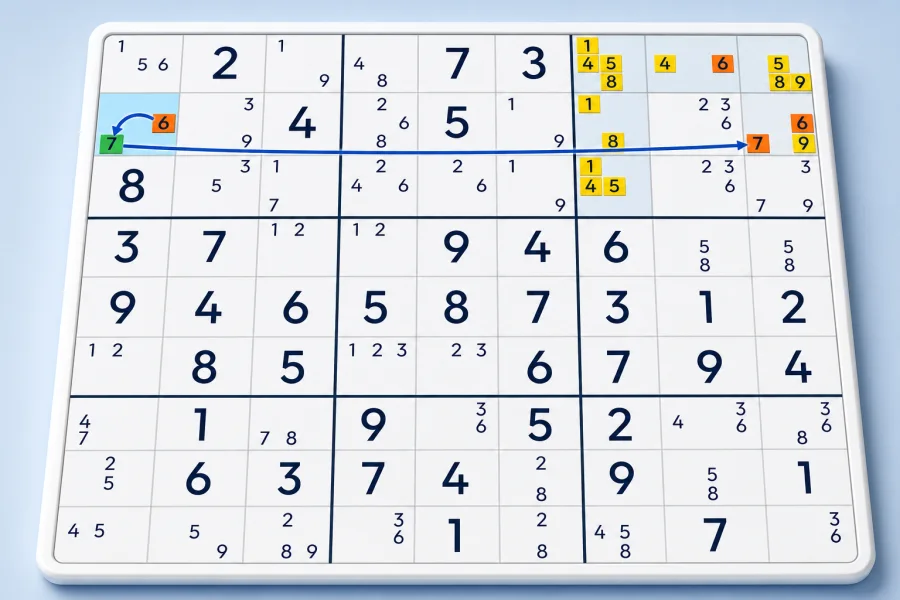
TUVWXYZ-Wing
A single-linked seven-cell almost-locked-set wing.
Continue Reading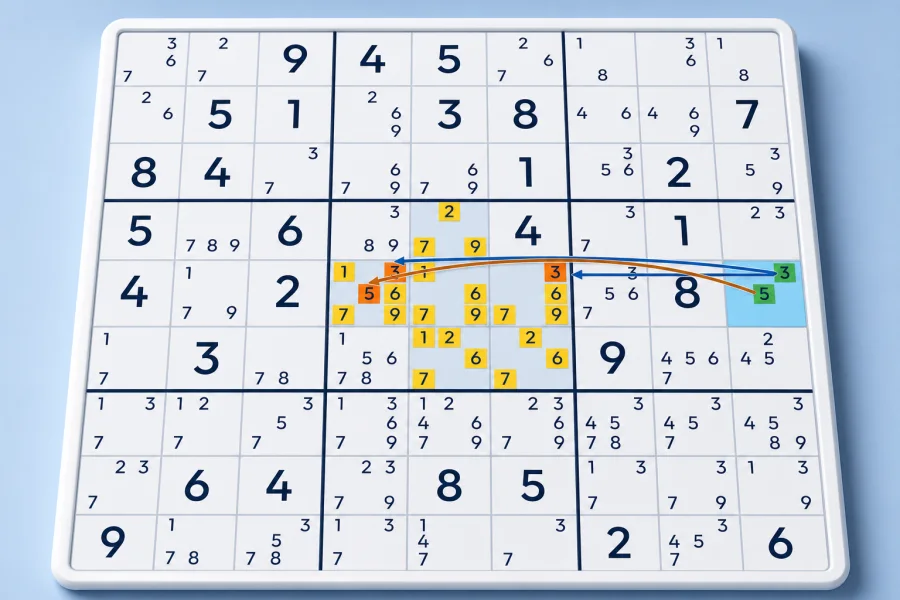
TUVWXYZ-Ring
The double-linked seven-cell form with two restricted commons.
Continue ReadingBUG patterns and larger almost-locked sets
A Bivalue Universal Grave (BUG) is a special endgame state in which every unsolved cell is bivalue and each remaining candidate is balanced within its rows, columns and boxes. Left unbroken, that structure would support more than one completion. BUG Types 1–4 examine the cells or candidates that disturb the balance and use the puzzle’s guaranteed uniqueness to determine a placement or elimination.
The larger wing and ring guides develop almost-locked-set (ALS) reasoning beyond WXYZ patterns. VWXYZ, UVWXYZ and TUVWXYZ structures contain five, six and seven cells respectively. In a wing, one restricted common links the component sets; in a ring, two restricted commons create a doubly linked structure and often broader eliminations. The names encode pattern size, but size alone is not proof: the candidates must satisfy the ALS count, visibility and restricted-common conditions described in each guide.